Discraft Zone Review: The Best Overstable Approach Disc

Quick Comparison
| Product | Speed↑ | Glide↑ | Turn↑ | Fade↑ | Best For | Price |
|---|---|---|---|---|---|---|
| 4 | 3 | 0 | 3 | Players who want maximum grip and a putter-like feel for soft, touchy approaches. | Check Price | |
| 4 | 3 | 0 | 3 | Players who want the most durable, consistent Zone that holds its overstability for years. | Check Price | |
| 4 | 3 | 0 | 3 | Players who want premium durability with a slightly grippier, premium feel than Z plastic. | Check Price | |
| 4 | 3 | 0 | 3 | Glow rounds, night leagues, and players who hate losing discs in low light. | Check Price |


Players who want maximum grip and a putter-like feel for soft, touchy approaches.
Check Price on AmazonPlayers who want the most durable, consistent Zone that holds its overstability for years.
Check Price on AmazonPlayers who want premium durability with a slightly grippier, premium feel than Z plastic.
Check Price on AmazonGlow rounds, night leagues, and players who hate losing discs in low light.
Check Price on AmazonIf you only carry one utility disc, make it the Discraft Zone. It is the most reliable overstable approach disc in the sport, and it earns that reputation by doing exactly one thing perfectly: finishing left (for a right-handed backhand) with a predictable, controlled fade, every single throw, in every condition. There are flashier discs and longer discs, but there is no disc you can trust more when the round gets ugly and you simply need to scramble back into position.
Here is the honest verdict up front. The Zone is a scramble disc, a headwind disc, a forehand-touch disc, and a short-range utility tool. It is the disc you reach for when you need a guaranteed result and zero surprises. What it is not is a putting putter. If you are standing 25 feet from the basket trying to drain a putt, the Zone is the wrong tool, and we will get into why that distinction matters more than most beginners realize.
This Discraft Zone review breaks down what the flight numbers actually mean, the shots the Zone is built for, how each plastic variant changes the feel and overstability, and where the Zone fits against its more aggressive siblings in the Zone family. By the end you will know exactly which Zone to throw and when to pull it out of the bag.
What the Discraft Zone Flight Numbers Mean
The standard Discraft Zone carries flight numbers of 4 | 3 | 0 | 3. Those four numbers are speed, glide, turn, and fade. If you want a full breakdown of how the rating system works, our guide to disc golf numbers explained covers it in depth, but here is the short version as it applies to the Zone.
Speed 4 means the Zone is a slow disc. You do not need a powerful throw to make it fly correctly. That low speed rating is a feature, not a limitation, because it means the Zone will behave the same way whether a 300-foot player or a 500-foot player throws it.
Glide 3 is moderate, leaning low. Glide is the disc's tendency to stay aloft. The Zone has just enough glide to carry to a target but not so much that it floats past your intended landing zone. Low glide is exactly what you want in an approach disc, because it makes distance control predictable.
Turn 0 means the Zone resists turning over during the fast, early part of its flight. Even thrown hard, it will not flip to the right (for a right-handed backhand thrower). That zero turn is the foundation of its torque resistance.
Fade 3 is the headline number. Fade is how hard the disc hooks back at the end of its flight. A 3 fade is strong and dependable. The Zone will finish left with authority, and it does so the same way whether you throw it soft or hard, into a headwind or downwind.
Add it up and you get an overstable approach disc. "Overstable" means the disc fights against turning and finishes with a reliable fade no matter how much power you put on it. "Approach disc" means it is purpose-built for the shots inside roughly 250 feet where placement matters more than distance. The Zone is the textbook example of both terms.
One detail that makes the Zone special: its slightly lower profile and shallow rim. As Discraft's own Ledgestone brand-equivalents guide puts it, "the Zone's slightly lower profile makes it easier to handle for a wider range of players, the main reason why it has become the most popular approach disc on the market." A lower profile is comfortable in more hand sizes and grip styles, which is a big reason the Zone shows up in so many bags.
What the Discraft Zone Is Actually For
The Zone is a specialist. Knowing the shots it shines on is the difference between it being a bag staple and a disc that confuses you.
Approach shots inside 250 feet. This is the Zone's home. When you are too far to putt but close enough that a fairway driver would sail long, the Zone covers that awkward middle ground. Throw it on a hyzer line, let the fade do its work, and watch it settle near the pin.
Forehand touch shots. The Zone is one of the best forehand approach discs ever made. Its torque resistance means it will not turn over even with the wobble and off-axis spin that a forehand release tends to add. For short, controlled flick approaches, nothing beats it.
Headwind shots. Wind makes understable discs flip and overstable discs even more overstable. The Zone is overstable enough to punch through a headwind and still finish predictably, without ballooning up and stalling. When the wind is howling, the Zone goes from useful to essential.
Flex shots and spike hyzers. Need the disc to come down hard and stop, with no roll-away? A spike hyzer with the Zone drops it on a dime. Need a controlled flex line that fades back to your target? The Zone holds the line and finishes left every time.
Scrambling. This is where the Zone earns its loyalty. You are behind a tree, blocked, with a tiny gap and an ugly angle. The Zone's reliability means you can commit to a line and trust it absolutely. It will not surprise you. When you are scrambling for par, surprises lose strokes.
Now the honest part: the Zone is not a putting putter. This trips up a lot of newer players. A putting putter is a disc you use from inside the circle to actually hole out, and the best ones have soft, gripping plastic, a comfortable bead or beadless profile, and a straight, gentle flight that floats into the chains. The Zone fades hard. Throw it at the basket from 25 feet and that 3 fade will pull it left of the chains unless you compensate. It can be done, and a handful of pros do putt with overstable discs, but for most players it is the wrong tool.
If you are looking for a disc to actually putt with, read our guide on how to putt in disc golf and our roundup of the best disc golf putters reviewed. Use a dedicated putting putter inside the circle, and use the Zone for everything outside it. That two-disc system, one putter for putting and one Zone for approaching, is one of the simplest upgrades a developing player can make.
Discraft Zone Plastic Variants Compared
The Zone mold flies the same in every plastic, but the plastic dramatically changes the feel in your hand, the grip, the durability, and how quickly the disc beats in toward less overstability. Here are the four variants worth knowing, from grippiest to firmest.
Discraft Jawbreaker Zone
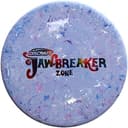
Discraft Jawbreaker Zone Putt and Approach Golf Disc
Players who want maximum grip and a putter-like feel for soft, touchy approaches.
Pros
- Best grip of any Zone plastic, especially in wet or cold conditions
- Chalky, comfortable feel that suits touch shots
- Beats in to a smooth, controllable flight relatively quickly
- Usually the most affordable Zone variant
Cons
- Least durable premium plastic in the Zone lineup
- Loses its sharpest fade faster than firmer plastics
- Soft feel is not for players who prefer a firm, snappy release
Jawbreaker plastic has a chalky, slightly rubbery texture that gives you the most grip of any Zone variant. If you have ever struggled to hold an approach disc in cold weather or in the rain, the Jawbreaker Zone solves that problem. The blended plastic looks like swirled candy, which is where the name comes from, but the practical benefit is a confident, locked-in grip when conditions are wet or your hands are cold.
The trade-off is durability. Jawbreaker is the softest premium plastic in this lineup, so it beats in faster than Z or ESP. For some players that is a downside, but for an approach disc it can actually be a feature. A slightly beat-in Jawbreaker Zone loses a touch of its sharpest fade and becomes a smoother, more controllable approach disc, while still staying overstable enough to trust. Many players intentionally pick Jawbreaker because they want that broken-in feel sooner.
This is the Zone to buy if you value feel above all else, or if you want a single disc that bridges the gap between an approach disc and a putter in terms of hand feel. The grip is genuinely excellent.
Discraft Z Zone
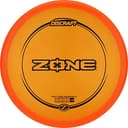
Discraft Z Zone Putt and Approach Golf Disc
Players who want the most durable, consistent Zone that holds its overstability for years.
Pros
- Extremely durable, holds its flight for years
- Firm, consistent feel that pros and advanced players favor
- Retains full overstability longer than softer plastics
- The most widely stocked and easy-to-replace Zone variant
Cons
- Firm plastic offers less grip than Jawbreaker in wet conditions
- Glossy surface can feel slick until you find your grip
- Slightly pricier than Jawbreaker
Z plastic is Discraft's premium clear plastic, and the Z Zone is the most popular version of the most popular approach disc. If you want one Zone and you want it to behave the same way three seasons from now as it does today, this is the pick. Z plastic is firm, glossy, and extremely durable. It shrugs off tree hits and shanks off chains, and it holds its flight characteristics far longer than Jawbreaker.
For an approach disc, durability matters more than it does for a driver. You want your scramble disc to be a known quantity. A Z Zone gives you years of identical flight, which means the muscle memory you build with it stays accurate. There is real value in throwing a disc that does not change on you.
The firmer feel takes a small adjustment if you are coming from softer plastics, but most players settle in quickly. The Z Zone holds its full 3 fade longer than any other variant here, which makes it the most overstable-feeling Zone over the long haul. If you play in wind a lot, that staying power is a genuine advantage. For most players asking which Zone to buy first, the Z Zone is the answer.
Discraft ESP Zone
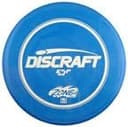
Discraft ESP Zone Putt and Approach Golf Disc
Players who want premium durability with a slightly grippier, premium feel than Z plastic.
Pros
- Premium grip with near-Z durability
- Beautiful swirled colorways
- The variant most favored by touring professionals
- Beats in to an excellent seasoned flight without losing reliability
Cons
- Most expensive of the four main variants
- Feel and overstability vary slightly run to run
- Marginal durability edge to pure Z plastic
ESP is Discraft's flagship blended premium plastic, and the ESP Zone is the disc you see in a lot of touring pros' bags. ESP splits the difference between Z and Jawbreaker: it is nearly as durable as Z plastic but has a slightly grippier, more tactile surface, often with beautiful swirled colors. If you find Z plastic a touch too slick but Jawbreaker too soft, ESP is the sweet spot.
The flight is identical to every other Zone, 4 | 3 | 0 | 3, but ESP tends to feel a hair more overstable out of the box than the same-weight Z Zone, and it beats in to a workable, slightly-less-overstable flight a bit faster than Z. Many players describe a well-seasoned ESP Zone as the perfect approach disc, overstable enough to trust in wind but smooth enough for finesse lines.
This is the variant for the player who has thrown a Zone before, knows they love it, and wants the best feel-plus-durability combination Discraft offers. It costs a little more than Z, but the grip and the cosmetics make it worth the bump for a lot of players. If you only ever buy one Zone and you care about feel, ESP is a strong choice.
Discraft Glo Z Zone
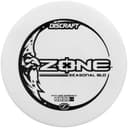
Discraft Seasonal Glo Z Zone Putter Golf Disc
Glow rounds, night leagues, and players who hate losing discs in low light.
Pros
- Glows brightly for night rounds after a quick charge
- Far easier to find in rough, shade, and low light
- Built on durable Z plastic
- Doubles as a fully capable daytime approach disc
Cons
- Glow additive can make the plastic feel slightly firmer
- Often a seasonal release, so availability comes and goes
- Glow fades over a long round and needs recharging
Glo Z is Z plastic with a glow-in-the-dark additive blended in. Charge it under a light or the sun and the Glo Z Zone glows brightly for a night round. The practical genius of a glowing approach disc goes beyond night leagues, though. Approach discs land in the rough, in leaf litter, and against treelines, and a glowing disc is dramatically easier to find at dusk or in heavy shade even during a normal daytime round.
The glow additive does change the plastic slightly. Glo Z tends to feel a touch firmer and can run marginally more overstable than standard clear Z, which for an approach disc is no problem at all. Slightly more fade just makes it a slightly more reliable scramble tool. The flight rating stays 4 | 3 | 0 | 3, and the Zone's signature dependable finish is fully intact.
If you play any night rounds, a glow disc you can actually trust is worth its weight in gold. Putters and approach discs are the discs most likely to get lost in the dark because they land short of where your eyes are tracking. A Glo Z Zone solves that, and because it is the Zone, you also get a fully tournament-worthy approach disc for daytime play. It does double duty.
The Zone Family: Zone OS and Zone GT
The standard Zone is the center of a small family of related molds. If the regular Zone is not quite overstable enough, or you want a different feel, two siblings are worth knowing.
The Zone OS is the more overstable version, and it is a serious utility disc. The "OS" stands for overstable, and it lives up to the name with flight numbers around 4 | 2 | 1 | 5. That 5 fade is one of the most aggressive in disc golf. The Zone OS is built for the heaviest headwinds, the hardest forehand rollers you need to kill, and spike hyzers that have to drop straight down with zero skip. It has less glide than the standard Zone and a monster, torque-proof fade. If you throw with a lot of power, or you constantly find that a regular Zone is flexing out and not fading hard enough, the Zone OS is the answer. You can pick up the Discraft Z Zone OS in durable Z plastic. For most players, though, the standard Zone is overstable enough, and the OS is a specialty add-on rather than a replacement.
The Zone GT is a different animal. GT stands for "groove top," a textured top surface that gives you extra grip and a distinctive feel under your thumb. The Zone GT came out of Discraft's Battle Pack program, which pits two prototype molds against each other and lets the disc golf community decide which one survives. The Zone GT family includes a Ringer-style top and a Banger-style top, each with a slightly different grip profile, and they fly close to the standard Zone numbers with a touch of variation. If you like the Zone's flight but want more texture to hold onto, the Discraft Zone GT Battle Pack lets you try both top concepts in one purchase. It is a fun pickup for grip-focused players, though the standard Zone remains the simpler, more universal choice.
There is also a Zone SS, the understable cousin with a turn rating that lets it hold an anhyzer or flex line longer. That one is less of a true Zone-family utility disc and more of a different tool, so we will leave it for another review. If you want to understand how a single mold can come in overstable, stable, and understable versions, our guide to overstable vs understable discs explains the spectrum clearly.
Who the Discraft Zone Is For
The Zone fits an unusually wide range of players, which is exactly why it is the best-selling approach disc on the market.
Beginners benefit because the Zone teaches you what a fade feels like. Because it is slow and overstable, you cannot really throw it wrong. It will fade reliably even with imperfect form, which builds the foundation of an approach game. A new player who learns to trust a Zone learns to play within their distance, and that is a faster path to lower scores than chasing distance.
Intermediate players lean on the Zone as a scoring tool. Once you can reach a basket area with a fairway driver or midrange, the Zone is what locks up the par. It is the disc that turns a bad drive into a recovered par because you can scramble with total confidence.
Advanced players and pros carry the Zone for its absolute reliability. At the top level, the difference between players is consistency, and the Zone is as consistent as discs get. It is on tour in nearly every pro's bag, usually in ESP plastic, doing the unglamorous work of finishing holes.
The shots where the Zone shines, again: approaches inside 250 feet, forehand touch shots, headwind throws, flex lines, spike hyzers, and scrambling out of trouble. If you do not already have a dedicated, trusted approach disc, the Zone should be your next purchase. Pair it with a good putter and a stable midrange, and you have the core of a scoring game. For midrange options to round out that core, see our best disc golf midrange discs guide.
Discraft Zone FAQ
Is the Discraft Zone a putter or an approach disc?
It is technically classified as a putt and approach disc, but in practice the Zone is an approach disc. Its strong 3 fade makes it excellent for upshots and scrambling and poor for actually putting from inside the circle. Use a dedicated putting putter to hole out and use the Zone for everything outside the circle.
What are the Discraft Zone flight numbers?
The standard Zone is rated 4 | 3 | 0 | 3, which is speed 4, glide 3, turn 0, and fade 3. That combination makes it a slow, low-glide, overstable approach disc with a dependable finishing fade.
Which Zone plastic should a beginner buy?
A beginner should start with the Z Zone. It is durable, widely available, and holds its flight for years, so the muscle memory you build stays accurate. If you want maximum grip, especially in wet or cold weather, the Jawbreaker Zone is a great alternative.
What is the difference between the Zone and the Zone OS?
The Zone OS is significantly more overstable, with a fade around 5 versus the standard Zone's 3, plus less glide. The Zone OS is a heavy-wind and power-thrower utility disc. Most players should start with the standard Zone, which is overstable enough for the vast majority of approach shots.
Can I throw the Zone forehand?
Yes, the Zone is one of the best forehand approach discs ever made. Its torque resistance, the 0 turn rating, means it will not flip or turn over even with the off-axis spin a forehand release adds. It is a go-to for short, controlled flick approaches.
Why is the Discraft Zone so popular?
The Zone is the most popular approach disc on the market because it combines absolute reliability with a low, comfortable profile that suits a wide range of hand sizes and grip styles. It fades the same way every throw, in every condition, which is exactly what you want from a scramble and approach tool.
Is the Zone good in the wind?
Yes. The Zone's overstability makes it one of the best discs for headwind approaches. A headwind tends to flip understable discs and add overstability to discs like the Zone, so it punches through wind and still finishes predictably instead of ballooning and stalling.
Final Thoughts
The Discraft Zone earns its status as the best overstable approach disc in the sport the hard way: by being boring. It does not turn over, it does not surprise you, and it does not fade differently because the wind picked up or you threw it a little harder than you meant to. It just finishes left, near your target, every time. In a sport where consistency wins rounds, that is the highest compliment you can pay a disc.
For your first Zone, get the Discraft Z Zone for its durability and long-term consistency. If you want the grippiest possible feel, the Discraft Jawbreaker Zone is the touch player's pick, and the Discraft ESP Zone is the premium-feel choice favored by touring pros. If you play night rounds or simply hate losing discs in the rough, the Discraft Glo Z Zone does double duty as a glowing approach disc.
Buy a Zone, throw it a hundred times, and learn exactly how far it fades. Once you trust it, your scramble game changes, and your scores follow. Just remember the one rule: putt with a putter, approach with the Zone.
Affiliate Disclosure
This post contains affiliate links. As an Amazon Associate, Pine Tree Disc earns from qualifying purchases at no additional cost to you. Learn more
Isaac "Steaks" Salisbury is the Maine native who founded Pine Tree Disc Golf. He's been throwing plastic through Maine's forests and fairways for years and started Pine Tree to build disc golf gear and content that players can wear and trust on and off the course.
Learn more about Pine Tree Disc →