Best Disc Golf Midrange Discs: Top Picks for Control and Consistency

Quick Comparison
| Product | Best For | Price |
|---|---|---|
Straight approaches, reliable placement shots, and all-around midrange duties | Check Price | |
Straight-to-understable lines with extra glide for maximum distance | Check Price | |
Dead-straight flights that show you exactly how you're throwing | Check Price | |
Maximum glide turnovers and gentle hyzer-flip tunnel shots | Check Price | |
Turnover shots, anhyzer lines, and rollers at midrange speed | Check Price | |
Approach shots with reliable fade and excellent glide | Check Price | |
Headwind shots, forehand approaches, and reliable skip shots | Check Price | |
Extreme headwinds, sharp-fading utility shots, and forehand rollers | Check Price | |
Straight-to-stable lines with fairway-driver distance at midrange speed | Check Price |


Straight approaches, reliable placement shots, and all-around midrange duties
Check Price on AmazonExtreme headwinds, sharp-fading utility shots, and forehand rollers
Check Price on AmazonStraight-to-stable lines with fairway-driver distance at midrange speed
Check Price on AmazonIf you want to shoot lower scores tomorrow, don't buy a new distance driver. Buy a better midrange. The best midrange disc golf discs are responsible for more scoring shots than any other disc type in your bag - approaches, gap hits, tunnel shots, and everything from 150 to 300 feet.
Here's the truth: most recreational players throw midranges farther and more accurately than they throw drivers. A midrange at 85% power will beat a driver at 100% power almost every time when accuracy matters. The problem is that too many players treat midranges as an afterthought, carrying just one "utility mid" instead of building their bag around them.
In this guide, we break down the 9 best midrange discs across every stability category - from flippy turnovers to beefy headwind fighters. Whether you're a beginner looking for your first reliable mid or an experienced player filling a gap in your bag, one of these discs belongs in your rotation.
Quick Picks: Best Midrange Discs at a Glance
- Best Overall: Discraft Buzzz - The gold standard for a reason, dead-straight and incredibly consistent
- Best for Beginners: Innova Mako3 - True zero turn and zero fade make it the most honest-flying mid on the market
- Most Versatile: Axiom Hex - Enough glide to push distance but enough stability to trust in the wind
- Best Understable Mid: Latitude 64 Fuse - Glide for days with gentle turn and zero fade
- Best Overstable Mid: Discraft Malta - Paul McBeth's workhorse for headwinds and forehand approaches
- Best for Turnovers: Discraft Meteor - Predictable understable flights without being uncontrollably flippy
- Best Overstable Utility: MVP Deflector - When you absolutely need the disc to fade hard left
- Best Premium Feel: Kastaplast Kaxe Z - Buttery smooth plastic with a laser-straight flight
- Best Approach Mid: Dynamic Discs EMAC Truth - Stable enough to trust but glidey enough to park
Why Midranges Are the Most Important Discs in Your Bag
Think about where you lose strokes during a round. It's rarely off the tee - most players can get their drive somewhere in the fairway. The strokes pile up on the second and third shots: approaches that miss the circle, gap shots that clip a tree, and upshots that sail past the basket.
Midranges solve all of these problems. They fly at speeds between 4 and 6, which means they respond to your release angle more predictably than drivers. When you angle a midrange on a hyzer line, it holds that hyzer. When you throw it flat, it flies flat. Drivers, especially high-speed ones, fight against your angles and do their own thing at higher arm speeds. Midranges do what you tell them to do.
A well-rounded bag should carry at least three midranges: one understable for turnovers and hyzer-flip tunnel shots, one neutral-stable for straight approaches and controlled placement shots, and one overstable for headwinds, skip shots, and forehand approaches. Many competitive players carry four or five. If you're only carrying one midrange right now, you're leaving strokes on the course.
Best Midrange Discs Reviewed
Discraft Buzzz
Pros
- Most consistent midrange ever made
- Available in every Discraft plastic for personal preference
- Works for backhands, forehands, and every angle
- Affordable and easy to find everywhere
Cons
- Not distinctive enough for players wanting more turn or fade
- ESP plastic can beat in quickly, losing stability
- Extremely common, so finding yours after a group throw can be tricky
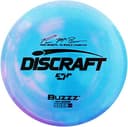
The Discraft Buzzz is the best midrange disc in the game - period. It has been the best-selling midrange for over a decade, and it earns that position every single year. The Buzzz flies dead straight with the slightest hint of turn and a gentle, predictable fade at the end. It does exactly what you expect, every single time.
What makes the Buzzz special is its consistency. Throw it flat and it stays flat. Put it on a slight hyzer and it holds the angle before fading back. Give it a touch of anhyzer and it will ride the line before settling softly. This predictability makes it a confidence disc - you step up knowing exactly where it's going. The rim feels comfortable in a power grip or a fan grip, making it equally useful off the tee on shorter holes and on approach shots.
The Buzzz is available in nearly every Discraft plastic, but ESP and Z are the most popular choices. ESP offers a slightly grippier feel with mild turn when new, while Z is more durable and tends to fly a touch more stable. Either way, you're getting the gold standard of midranges.
Axiom Hex
Pros
- Outstanding glide pushes distance without extra effort
- Low-profile feel is comfortable for all grip styles
- Dual-overmold rim offers a unique and satisfying hand feel
- Available in multiple premium plastics including Eclipse Glow
Cons
- Can be slightly less stable than the Buzzz in headwinds
- Higher glide can overshoot on shorter approach shots
- Slightly more expensive than some competitors
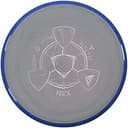
The Axiom Hex is the closest competitor to the Buzzz, and some players argue it's even better. The key difference is glide - the Hex's 5 glide rating (compared to the Buzzz's 4) means this disc carries farther on less power. For players who want a straight-flying mid that pushes distance without sacrificing accuracy, the Hex is hard to beat.
The low-profile feel in the hand is immediately comfortable, and the dual-overmold design (a hallmark of the Axiom/MVP family) gives the rim a satisfying density that inspires confidence. Thrown flat, the Hex drifts slightly right at its peak before settling back to center with a gentle fade. The flight shape is predictable enough for tunnel shots but has enough movement to work on wooded courses where you need to navigate around obstacles.
If you're deciding between the Buzzz and the Hex, it comes down to what you value more. The Buzzz is slightly more torque-resistant and reliable in wind. The Hex carries farther and is more forgiving for players with moderate arm speed. Both are excellent choices, and many competitive players carry one of each.
Innova Mako3
Pros
- Perfectly neutral flight teaches and rewards clean form
- Outstanding glide for effortless distance at midrange speed
- Available in Innova's full range of premium plastics
- Excellent form-check disc for players working on technique
Cons
- Zero fade means it won't fight back in crosswinds
- Requires clean release angles - punishes sloppy form
- Rounded rim feels different from other midranges
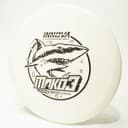
The Innova Mako3 is the most honest disc in disc golf. With flight numbers of 5/5/0/0, this disc has zero turn and zero fade - it goes exactly where you throw it. No compensation, no surprises. If it turns right, you released it on an anhyzer. If it fades left, you put too much hyzer on it. The Mako3 is a form-check disc as much as it is a scoring disc.
For beginners, the Mako3 is one of the best learning tools available. Because it doesn't mask throwing errors, you get immediate feedback on your release angle and nose angle. This might sound frustrating, but it actually accelerates your development. Players who learn on a Mako3 build cleaner form faster than those who rely on overstable discs to cover up off-axis torque.
For experienced players, the Mako3 earns its spot as a dead-straight tunnel shooter. Tight gaps, flat approaches to elevated baskets, and straight-line upshots are where this disc shines. The rounded rim profile feels a bit different from the flat-topped Buzzz - some players prefer it, others don't. Try both and see which hand feel suits you better.
Latitude 64 Fuse
Pros
- Highest glide in the midrange category for effortless distance
- Zero fade keeps the disc on line all the way to the ground
- Excellent hyzer-flip disc for straight tunnel shots
- Forgiving for lower arm speeds
Cons
- Too much glide can make distance control tricky on approaches
- Not reliable in headwinds due to understable profile
- Takes some time to learn distance control
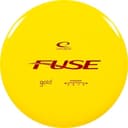
The Latitude 64 Fuse is a glide machine. With a 6 glide rating - one of the highest you'll find on any midrange - this disc floats through the air like it doesn't want to come down. Pair that with gentle understability and zero fade, and you get a midrange that holds whatever line you put it on for an impressively long time.
Where the Fuse really shines is on wooded courses with tight, straight fairways. Throw it on a slight hyzer and watch it flip up to flat and ride straight through the gap. The zero fade means it doesn't hook at the end, so you don't need to compensate with extra anhyzer. For players who struggle with turnovers, the Fuse provides a controlled, gentle right-to-left shape (for RHBH throws) that builds confidence in shaping shots.
The Fuse is also a secret weapon for players with lower arm speed. That massive glide compensates for less power, allowing the disc to cover more distance than you'd expect from a 5-speed midrange. If you're newer to the sport and feel like your midranges aren't going far enough, try a Fuse before reaching for a faster disc. You might be surprised at how much distance you gain just from extra hang time.
Discraft Meteor
Pros
- Reliable and predictable understable flight
- 1 fade keeps the disc from rolling uncontrollably
- Excellent for developing turnover shot skills
- Works great as a roller disc at midrange speed
Cons
- Too understable for straight shots in any wind
- Requires touch and control rather than power
- Beats in quickly in base plastics, becoming even flippier
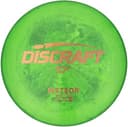
The Discraft Meteor is your go-to disc when you need the shot to go right (for RHBH throwers). With a turn rating of -3, this is a confidently understable midrange that will reliably flip over and hold a turnover line. Unlike extremely flippy mids that feel unpredictable, the Meteor's 1 fade provides just enough finish to keep the disc from rolling away into oblivion.
The Meteor fills a specific slot that the Fuse doesn't - it's more aggressively understable. While the Fuse gently drifts right, the Meteor commits to the turnover. This makes it the better choice for sweeping anhyzer shots around obstacles, for low ceiling rollers, and for hyzer-flip shots where you want the disc to fully turn over rather than just flip to flat.
Newer players should know that the Meteor rewards smooth, controlled throws rather than brute force. Muscling this disc will cause it to turn and burn into the ground. Instead, throw at about 70% power with a flat release and let the disc do the work. Once you learn to trust the understability, the Meteor opens up shot shapes that nothing else in your bag can produce.
Dynamic Discs EMAC Truth
Pros
- Perfect blend of glide and fade for approach shots
- Predictable finish builds confidence on placement shots
- Works well for both backhand and forehand throws
- Eric McCabe's stamp of approval from a World Champion
Cons
- The 2 fade can feel like too much for dead-straight shots
- Not the best choice for turnover lines
- Some players find the rim slightly wider than other mids
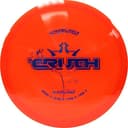
The EMAC Truth is Eric McCabe's signature midrange, and it sits in a sweet spot between the dead-straight Mako3 and the more overstable options lower on this list. With flight numbers of 5/5/0/2, you get a midrange that flies straight for most of its flight before fading reliably at the end. This predictable finish makes it one of the best approach discs in the game.
Where the EMAC Truth separates itself is in that combination of high glide and moderate fade. The 5 glide keeps it airborne, covering distance that more overstable mids can't match, while the 2 fade gives you confidence that the disc will always finish left (RHBH). You never have to wonder where this disc is going - it's going straight, then left. Every time.
For players who throw the Buzzz and wish it finished with a little more authority, the EMAC Truth is the natural upgrade. It's also an excellent choice for forehand approaches because the moderate overstability handles forehand torque without fighting too hard. The Lucid plastic is tough and long-lasting, while the Fuzion blend offers a slightly grippier feel for colder weather rounds.
Discraft Malta
Pros
- Incredibly reliable overstable flight in all conditions
- Flat top profile is perfect for forehand grips
- Handles headwinds without turning over
- Available in a wide range of Discraft plastics
Cons
- Not versatile for straight or turnover shots
- 3 fade is too much for players with lower arm speed
- Limited distance compared to neutral midranges
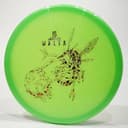
The Discraft Malta is Paul McBeth's overstable midrange, and it flies like a faster Zone. That's not an accident - McBeth designed the Malta to bridge the gap between his Zone (a 4-speed approach disc) and his Buzzz (his straight-flying workhorse). The result is an overstable mid that handles torque, fights headwinds, and finishes with a strong, consistent fade.
With a turn rating of 1 (meaning slight resistance to turn) and a fade of 3, the Malta is not a disc you throw for distance. It's a scoring disc - you throw it when you need to guarantee a specific landing zone. Forehand approaches into dogleg lefts, headwind shots that need to hold a line, and skip shots that need to kick hard left all belong in the Malta's wheelhouse.
The Malta has quickly become one of the most popular overstable midranges in competitive disc golf. Its flat top profile sits cleanly in the hand for forehands, and the ESP plastic provides enough grip to stay confident in all weather conditions. If you've been using a Buzzz OS or a Roc3 in this slot, give the Malta a throw - the flight path is cleaner and more predictable than both.
MVP Deflector
Pros
- Most reliable overstable mid for extreme conditions
- GYRO overmold adds stability beyond what flat-design mids offer
- Immune to headwinds and off-axis torque
- Predictable fade you can always count on
Cons
- Way too overstable for general-purpose throwing
- Minimal glide means limited distance potential
- Beginners and low-arm-speed players won't get useful flights
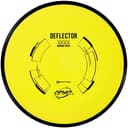
The MVP Deflector is the most overstable midrange on this list, and that's exactly why it's here. With a fade rating of 4, this disc dumps hard left at the end of its flight - harder than almost any other mid on the market. It's not a disc you throw on every hole. It's a disc you throw when nothing else will do the job.
Think of the Deflector as your utility knife for impossible situations. Need to get around a sharp dogleg left with a headwind blowing? Deflector. Need a forehand roller that kicks reliably? Deflector. Need a skip shot off a hillside that doesn't slide past the basket? Deflector. This disc fights wind, resists torque, and does exactly one thing - fade left with extreme authority.
The Deflector is not for beginners. If your arm speed is below average, this disc will feel like throwing a brick - it will hyzer out immediately and land short. But for intermediate and advanced players, having a meathook mid in the bag solves problems that no other disc can. The GYRO technology (MVP's overmold rim design) concentrates the weight on the outer edge, adding even more stability and gyroscopic resistance.
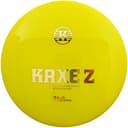
Kastaplast Kaxe Z
Pros
- Kastaplast K1 plastic is the best-feeling plastic in disc golf
- Speed 6 bridges the mid-to-fairway gap perfectly
- Incredibly consistent between runs and production batches
- Beadless rim makes for clean releases on backhands and forehands
Cons
- Speed 6 may be too fast for players who want a true midrange feel
- Limited plastic options compared to Discraft or Innova
- Slightly harder to find in stock than mainstream brands
The Kastaplast Kaxe Z sits at the boundary between midrange and fairway driver, and that's what makes it such a unique weapon. At speed 6, it's faster than most midranges but slower than a typical fairway driver, giving you a disc that covers the awkward 250-to-320-foot gap that other discs leave open.
But the real reason to try the Kaxe Z is the plastic. Kastaplast's K1 blend is widely considered the best-feeling plastic in disc golf - smooth, slightly tacky, and incredibly consistent run to run. Every Kaxe Z feels the same in the hand, which means you can buy a replacement and know exactly what you're getting. In a sport where disc consistency varies wildly between manufacturers, this reliability is genuinely remarkable.
The "Z" stands for "Zero" - as in, zero bead on the rim. This gives the Kaxe Z a cleaner release than the original Kaxe, especially for forehand throwers who prefer a smooth lower rim. The flight is straight with a reliable 2 fade, similar to the EMAC Truth but with extra speed to push more distance. If you're looking for one disc that bridges the gap between your mids and your fairway drivers, the Kaxe Z fills that role perfectly.
How to Choose a Midrange Disc
Choosing the right midrange comes down to three questions: what stability do you need, what plastic do you prefer, and what's your arm speed?
Stability is the biggest factor. If you mostly throw backhand and need turnovers, start with the Fuse or Meteor. If you need straight shots, the Buzzz, Hex, or Mako3 are your best options. If you need something for headwinds and forehands, look at the Malta or Deflector. Most players should carry at least one disc from each stability category.
Plastic type affects both feel and flight. Premium plastics (ESP, Z, Star, Champion, Neutron, K1) are more durable and hold their stability longer. Base plastics (Pro-D, DX, Prime, K3) are grippier and cheaper but beat in faster, becoming more understable over time. If you want a disc that stays stable, go premium. If you want a disc that will naturally become more understable as it wears in, base plastic works in your favor.
Arm speed matters more than you think. If you throw midranges under 250 feet, avoid anything with a fade rating above 2 - it will just dump out early and land short. Start with understable or neutral mids and work toward more overstable options as your arm speed develops. If you're throwing midranges over 300 feet, you can handle the overstable options and might even find the understable mids too flippy.
Common Midrange Mistakes to Avoid
Carrying only one midrange. This is the most common mistake in recreational disc golf. A single midrange can't cover turnovers, straight shots, and overstable approaches. You need at least two, ideally three midranges covering different stabilities.
Throwing midranges too hard. Midranges are designed for control, not max distance. Throwing a midrange at 100% power introduces off-axis torque and nose angle errors that destroy accuracy. Throw your mids at 75-85% power and focus on clean releases. You'll be more accurate and probably just as far.
Ignoring nose angle. More than any other disc type, midranges punish nose-up releases. Because they fly at moderate speeds, a nose-up midrange will stall out and fade early, losing 30-50 feet of distance. Focus on keeping the nose of the disc flat or slightly down on release, and you'll see immediate improvement in your midrange distance.
Buying overstable mids too early. Beginners often gravitate toward overstable discs because they feel "reliable" - the disc always fades left, so at least you know where it's going. But this masks form issues and limits your shot selection. Start with neutral or understable mids, learn to throw them straight, and add overstable options as you need them.
Not matching disc to shot shape. If you find yourself forcing shots with the wrong disc - throwing an overstable mid on an anhyzer line, or trying to get a flippy mid to hold a hyzer - you need more midranges, not more arm speed. Let each disc do what it was designed to do, and your scoring will improve immediately.
Final Thoughts
The best midrange disc golf discs reward clean technique and smart shot selection. Unlike drivers, where raw arm speed can bail you out, midranges demand precision and consistency. That's what makes them the most important discs in your bag - they expose weaknesses in your game while also being the fastest path to shooting lower scores.
If you're starting from scratch, pick up a Buzzz or Hex for straight shots and a Mako3 for form work. Add a Fuse or Meteor when you want to shape turnovers, and grab a Malta when you need headwind reliability. That four-disc midrange setup will cover every shot you'll face on the course.
The discs on this list have earned their spots through years of tournament performance, community trust, and proven flight characteristics. Try a few, find the ones that match your hand feel and throwing style, and watch your approach game transform.
Affiliate Disclosure
This post contains affiliate links. As an Amazon Associate, Pine Tree Disc earns from qualifying purchases at no additional cost to you. Learn more