Hyzer Flip: How to Throw It and the Best Discs for Distance

Quick Comparison
| Product | Speed↑ | Glide↑ | Turn↑ | Fade↑ | Best For | Price |
|---|---|---|---|---|---|---|
| 7 | 5 | -2 | 1 | Intermediate players who want a controllable, forgiving fairway driver that flips to flat without flipping over. | Check Price | |
| 8 | 6 | -3 | 1 | Lower-power players and beginners who want the easiest possible hyzer flip and effortless glide. | Check Price | |
| 9 | 6 | -3 | 1 | Intermediate players ready to move up to speed 9 and chase real distance on a hyzer flip. | Check Price | |
| 9 | 5 | -3 | 1 | Players who want a high-speed hyzer flip disc that also doubles as a long anhyzer and roller disc. | Check Price | |
| 5 | 5 | 0 | 0 | Practicing the hyzer flip release on a slower, forgiving midrange before moving to drivers. | Check Price |


Intermediate players who want a controllable, forgiving fairway driver that flips to flat without flipping over.
Check Price on AmazonLower-power players and beginners who want the easiest possible hyzer flip and effortless glide.
Check Price on AmazonIntermediate players ready to move up to speed 9 and chase real distance on a hyzer flip.
Check Price on AmazonPlayers who want a high-speed hyzer flip disc that also doubles as a long anhyzer and roller disc.
Check Price on AmazonPracticing the hyzer flip release on a slower, forgiving midrange before moving to drivers.
Check Price on AmazonIf you have ever watched a longer thrower's disc fly out flat, hang in the air for what feels like an extra second, and glide well past where yours landed, you were probably watching a hyzer flip. The hyzer flip is the single most efficient distance technique an intermediate disc golfer can learn, and it does not require a faster arm, new footwork, or hours in the gym. It requires the right disc and a release angle most players already have within reach.
Here is the verdict up front: if you can throw a disc roughly 250 feet and you want to throw it 320, the hyzer flip is the shortcut. It converts the natural hyzer release you already produce into a long, flat, gliding flight, and it does so by using the disc itself to do the work your arm cannot. Learn it and your max distance jumps in a week, not a season.
This guide breaks down what a hyzer flip actually is, the simple physics of why it works, why it absolutely requires an understable disc, and a clear step-by-step method to throw one. Then we cover the best discs for a hyzer flip, the mistakes that keep players from landing it, and the questions that come up most often.
What a Hyzer Flip Actually Is
A hyzer flip is a throw where you release an understable disc on a hyzer angle (tilted so the far edge points down toward the ground) and the disc's natural understability "flips" it up to flat during flight. Instead of fading hard left like a hyzer normally would, the disc rolls up to level, flies dead straight, and rides out its glide.
Three terms make this click. A hyzer is a release angle where the disc tilts down on the side away from you. An understable disc is one that wants to turn to the right during flight (for a right-handed backhand thrower). When you put those two together, the hyzer angle and the rightward turn cancel each other out. The disc starts tilted, fights back toward flat, and the result is a flight that looks almost magically straight and long.
The reason it produces distance is glide. A disc that fades early dumps its energy into a hard turn and drops. A disc held flat keeps converting forward speed into forward distance for as long as possible. The hyzer flip is just a reliable way to get the disc flat and keep it there without needing the arm speed to throw a stable disc flat on its own. If the words hyzer and anhyzer still feel slippery, our guide to hyzer vs anhyzer lays out every release angle with diagrams.
The Simple Physics of Why It Works
You do not need an engineering degree here, just one idea: a spinning disc resists changes to its orientation, and aerodynamic forces slowly act on it anyway. When a disc leaves your hand, it has spin (gyroscopic stability) and speed. Early in the flight, when speed is highest, the air pushes an understable disc to turn over toward flat or even past flat. Late in the flight, when the disc slows down, it fades back.
A hyzer flip uses the early, high-speed part of the flight on purpose. You start the disc tilted on hyzer. The high-speed turn force flips it up toward flat. Because you started it tilted down, "flipping up" lands it at level rather than past level into a turnover. Then the disc cruises flat through the middle of its flight and fades gently at the end as it slows.
The whole trick is matching the amount of hyzer to the disc's understability and your power. Too much understability or too little hyzer and the disc flips past flat and turns into the ground. Too much hyzer or too little understability and it never flips up, fading out short. When the match is right, the disc snaps to flat and holds it. That is the flight you are chasing. Flight numbers are the cheat sheet for finding that match, and our breakdown of disc golf flight numbers explains exactly which digit controls turn.
Why a Hyzer Flip Requires an Understable Disc
This is the part players skip, and it is why their hyzer flips fail. You cannot hyzer flip a stable or overstable disc at intermediate arm speed. It is not a technique problem. It is physics.
A stable disc has a turn rating around 0 and an overstable disc has a positive fade with little or no turn. Neither one wants to turn right during flight, so when you release it on hyzer, there is no force to flip it up. It simply flies out on the hyzer angle and fades, exactly like a normal hyzer shot. You can throw it as cleanly as you want and it will never flip flat.
An understable disc, by contrast, has a negative turn rating, typically -2 or -3. That negative number is the disc's built-in willingness to turn right at speed. That willingness is the engine of the hyzer flip. Release it on hyzer and the turn force has something to work with, so it climbs to flat.
This is why your disc selection matters more than your form for this shot. A player with a 280-foot arm throwing an understable -3 fairway driver will out-drive a player with a 340-foot arm throwing an overstable disc they cannot flip, on the right hole. The disc is the tool. If you want the full menu of flippy molds, our roundup of the best understable disc golf discs covers options across every speed class. Below, we focus specifically on the discs that hyzer flip the best.
Step-by-Step: How to Throw a Hyzer Flip
The hyzer flip is built from five elements: grip, stance, release angle, power, and nose angle. Get these in order and the flight comes together.
Step 1: Set Your Grip
Use a standard backhand power grip: all four fingers under the rim, thumb on top, disc pressed firmly into the web of your hand. The grip itself is not special for a hyzer flip, but firmness matters. A loose grip leaks spin, and spin is what holds the disc stable enough to flip cleanly instead of wobbling. Grip firm enough that the disc would not slide if you shook your hand.
Step 2: Set Your Stance and Reach Back
Stand with your shoulders aligned to your intended flight line and take a normal reach back. Nothing about the footwork changes for a hyzer flip. If you throw with an X-step run-up, keep it. If you throw standstill while learning, that is fine too, and actually better for isolating the release angle. The goal in this step is a clean, repeatable pull so the only variable you are tuning is the angle.
Step 3: Set the Release Angle (the Hyzer)
This is the move that defines the shot. As you pull the disc through and snap it forward, release it with the outer edge tilted down toward the ground. For a right-handed backhand thrower, the right edge of the disc points down. Start with a modest hyzer, roughly 15 to 20 degrees of tilt. Think of it as the angle a clock hand sits at around 1 or 2 minutes past the hour, not a steep dive.
The amount of hyzer is the dial you adjust. More understable disc or more power means you need more hyzer to keep it from flipping past flat. More stable disc or less power means less hyzer. Start moderate and adjust based on what you see.
Step 4: Throw With Real Power
A hyzer flip needs speed to flip up. This surprises people who think of understable discs as "easy" discs you throw soft. The opposite is true here. The turn force that flips the disc to flat only shows up at higher speeds, so you need to throw with commitment, not a lazy toss. Throw it about as hard as you would throw any drive. If you decelerate or baby it, the disc never reaches flip speed and just fades out on the hyzer line.
Step 5: Keep the Nose Down
Nose angle is the quiet killer of distance. The nose is the leading edge of the disc relative to the ground. If the nose points up, the disc climbs, stalls, and dumps distance. You want the nose flat or very slightly down so the disc cuts forward instead of climbing.
To keep the nose down, pull the disc on a level plane through your chest, do not let your throwing hand rise at release, and avoid muscling the disc upward to "give it air." The glide does the lifting. Your job is to send it forward. A flat hyzer flip with the nose down is the flight that goes far. For a full breakdown of pull plane and timing, see our guide to throwing a disc golf drive.
Put it together: firm grip, normal reach back, 15 to 20 degrees of hyzer, full power, nose down. The disc leaves tilted, climbs to flat, and rides straight. When you nail it the first time, you will feel the difference in how long the disc hangs.
Best Discs for a Hyzer Flip
The right disc makes the hyzer flip easy and the wrong disc makes it impossible. Below are five understable molds that flip reliably, ordered roughly from most beginner-friendly to most arm-dependent. Match the disc to your power: lower arm speeds want the slower, more understable molds, and stronger arms can move up in speed.
Innova Leopard3
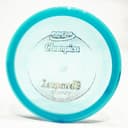
Innova Champion Leopard3
Intermediate players who want a controllable, forgiving fairway driver that flips to flat without flipping over.
Pros
- The -2 turn flips flat on a moderate hyzer, easy to control
- Speed 7 is approachable for intermediate arms
- Champion plastic is durable and grows flippier with wear
- Predictable, gentle fade at the end of flight
Cons
- Strong arms may flip it past flat and need to dial back hyzer
- Less raw distance ceiling than a high-speed driver
The Leopard3 is the disc most coaches hand a player who wants to learn the hyzer flip. At speed 7 with a -2 turn, it is fast enough to gain real distance but slow enough that an intermediate arm can power it up properly. The -2 turn is the sweet spot: enough understability to flip flat on a moderate hyzer, but not so much that it dives into a turnover the moment you release it cleanly.
Champion plastic adds a useful trait here. As Champion discs wear in, they become slightly more understable, so a Leopard3 grows into an even better hyzer flip disc over a season. It holds the flat line beautifully once it climbs up, and the modest fade at the end means it finishes predictably rather than burning into the ground.
If you can throw around 250 to 320 feet and want one disc to learn this shot with, start here. It is the lowest-risk, highest-reward pick on this list.
Latitude 64 Diamond
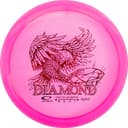
Latitude 64 Opto Diamond
Lower-power players and beginners who want the easiest possible hyzer flip and effortless glide.
Pros
- Very easy to flip flat even with modest power
- High 6 glide maximizes distance once flat
- Small, comfortable rim is easy to grip and release
- Often available in lightweight runs for even less effort
Cons
- Stronger arms will flip it past flat into a turnover
- Not a windy-day disc, it turns over easily in a headwind
The Diamond is the friendliest hyzer flip disc on this list for players still building arm speed. With a -3 turn and a high glide rating of 6, it wants to flip up and stay airborne, so you do not need much power to get a long, flat flight. For a player throwing in the 200 to 280 foot range, the Diamond often produces the longest drive in the bag.
That glide is the headline. A 6-glide disc converts speed into hang time efficiently, which is exactly what you want once the disc reaches flat. The Diamond is also a lighter-feeling, smaller-rimmed driver, so it is easy to grip and release without flutter. It is frequently sold in lightweight runs too, which further lowers the power needed to flip it.
The trade-off is that stronger arms will overpower the Diamond fast. If you already throw 330-plus, this disc will flip past flat and roll. But for the players it is built for, nothing makes the hyzer flip click faster.
Discraft Heat
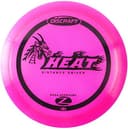
Discraft Elite Z Heat
Intermediate players ready to move up to speed 9 and chase real distance on a hyzer flip.
Pros
- Speed 9 gives a higher distance ceiling than a fairway driver
- Small, grippy rim is easy to release cleanly for a distance driver
- -3 turn flips flat reliably for mid-power arms
- Elite Z plastic holds its flight a long time
Cons
- Needs more power than a fairway driver to flip properly
- Underpowered throws will fade out and waste the speed
The Heat is the distance-driver step up for players who have learned the hyzer flip on a fairway driver and want more reach. At speed 9 with a -3 turn and 6 glide, it is a genuine distance disc that still flips flat for a mid-power arm. Discraft built the Heat specifically as an understable control driver, and it shows in how cleanly it climbs to level.
What makes the Heat special is the combination of distance-driver speed with a relatively small, grippy rim. Many speed 9 drivers have rims that intermediate players struggle to release cleanly, but the Heat is friendlier in the hand. That clean release matters for the hyzer flip because flutter at release ruins the flip.
This is the disc for the player throwing 290 to 340 feet who wants to break 350 on the right hole. Throw it on a moderate hyzer with full power and it will flip up and glide a long way. Elite Z plastic keeps the flight consistent for a long time before it beats in.
Innova Sidewinder
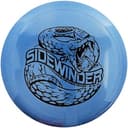
Innova G-Star Sidewinder
Players who want a high-speed hyzer flip disc that also doubles as a long anhyzer and roller disc.
Pros
- Versatile: hyzer flips, turnovers, and rollers from one disc
- G-Star plastic grips well in cold weather and beats in slowly
- -3 turn flips flat reliably with a controlled, tracking flight
- Proven mold that has helped countless players add distance
Cons
- Lower 5 glide means slightly less hang time than the Heat
- Speed 9 demands a developed arm to flip it properly
The Sidewinder is the classic understable Innova driver, and it has carried countless players through their first big distance jump. At speed 9 with a -3 turn, it covers the same territory as the Heat but with a slightly lower glide of 5, which gives it a touch more control and a slightly more grounded flight path. The result is a hyzer flip that climbs to flat and tracks straight with confidence.
G-Star plastic is the smart pick here. It is grippy in all temperatures, including cold rounds when stiffer plastics get slick, and it flexes slightly without losing the disc's flight character quickly. The Sidewinder in G-Star flips flat predictably and resists beating in too fast, so the flight you learn stays the flight you get.
Beyond the hyzer flip, the Sidewinder is one of the most versatile understable drivers made. The same disc throws long anhyzer turnovers and big distance rollers, so it earns its bag slot many times over. For a strong arm, it is a flip-to-flat workhorse on tunnel and gap shots.
Innova Mako3
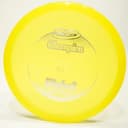
Innova Champion Mako3
Practicing the hyzer flip release on a slower, forgiving midrange before moving to drivers.
Pros
- Slower speed makes it forgiving while you learn the release
- Genuinely straight flight teaches you what flat looks like
- Champion plastic is extremely durable and consistent
- Stays useful as a control midrange long after you learn the shot
Cons
- Not understable, so it will not flip flat for low-power arms
- A midrange, so the distance gain is modest compared to drivers
The Mako3 is the odd one out on this list, and it is here on purpose. With a 0 turn and 0 fade, it is technically a stable midrange, not an understable disc. But that neutral profile makes it the best training tool for the hyzer flip. Released on a small hyzer, a Mako3 from a moderate arm will flip up to flat and fly dead straight, because at midrange speed even a neutral disc behaves slightly understable for a strong throw.
Why train on it? A midrange is slower and far more forgiving of release errors than a driver. If your hyzer flip is inconsistent, the Mako3 lets you isolate the angle and feel what a clean flip-to-flat looks like at lower speed and shorter distance. Once the motion is grooved, you carry it straight to the drivers above.
It also stays in your bag forever as one of the straightest control discs made. So while it is not a pure distance disc, learning the hyzer flip with a Mako3 in hand pays off twice: better technique now, a reliable straight midrange for life.
Common Mistakes That Ruin a Hyzer Flip
Throwing Too Soft
The most common mistake. Players treat understable discs as "easy" discs to lob gently, but the hyzer flip needs speed to flip up. A soft throw never reaches flip speed, so the disc just rides out the hyzer angle and fades short. Throw it with real power. Commit.
Using the Wrong Disc
If your disc has a turn rating of 0 or higher, it will not hyzer flip at intermediate arm speed, period. No amount of clean form fixes this. Check the third flight number. You want -2 or -3 for a reliable flip. If you are fighting your disc, the disc is the problem.
Too Much Hyzer
If you release with a steep hyzer, the disc may not have enough flight time or turn force to climb all the way back to flat before it fades and lands. The flight comes out short and low. Start with a modest 15 to 20 degree tilt and adjust from there.
Nose Up at Release
A nose-up release makes the disc climb, stall, and drop. It is the most common reason a hyzer flip that "looked good" still came up short. Keep the nose flat or slightly down and let the glide provide the lift.
Not Adjusting for Wind
Understable discs turn over easily in a headwind. A hyzer flip into the wind will often flip past flat and roll because the wind acts like extra speed. In a headwind, use less hyzer or a more stable disc. In a tailwind, the disc flips less, so add a little hyzer.
Frequently Asked Questions
What does hyzer flip mean in disc golf?
A hyzer flip is throwing an understable disc on a hyzer release angle so that the disc's understability flips it up to flat during flight. Instead of fading like a normal hyzer, the disc rolls level and flies long and straight. It is one of the most efficient ways for intermediate players to gain distance.
Why does a hyzer flip add distance?
It adds distance because it gets the disc flat and keeps it there. A disc that fades early dumps its speed into a turn and drops. A disc held flat keeps converting speed into forward distance and uses its full glide. The hyzer flip is a reliable way to achieve a flat, gliding flight without needing the arm speed to throw a stable disc flat.
Can you hyzer flip an overstable disc?
No. Overstable and stable discs do not have the negative turn rating needed to flip up. Released on hyzer, they simply fly out on the hyzer line and fade. You need an understable disc, ideally with a turn rating of -2 or -3, for a hyzer flip to work.
What flight numbers are best for a hyzer flip?
Look at the third number, turn. A rating of -2 or -3 is ideal. The Innova Leopard3 (-2) is the easiest to control, while -3 discs like the Latitude 64 Diamond, Discraft Heat, and Innova Sidewinder flip faster and reward more power. Match the speed of the disc to your arm: slower discs for developing arms, speed 9 for stronger throwers.
How much hyzer should I put on the disc?
Start with a moderate hyzer of about 15 to 20 degrees of tilt. Adjust from there based on what you see: if the disc flips past flat and turns over, use less hyzer or a more stable disc. If it never climbs to flat and fades early, use more hyzer or a more understable disc, or throw with more power.
Do I need a special grip for a hyzer flip?
No. A standard backhand power grip works fine. The only thing to emphasize is firmness, because a loose grip leaks spin and spin keeps the disc stable enough to flip cleanly. Grip the disc firmly and release it clean.
Will a hyzer flip work in the wind?
It depends on wind direction. A headwind makes understable discs turn over more, so a hyzer flip into the wind can flip past flat and roll. Use less hyzer or a more stable disc in a headwind. A tailwind reduces the flip, so add slightly more hyzer. Calm conditions are easiest for learning.
Final Thoughts
The hyzer flip is the rare disc golf technique that delivers a big result for a small change. You do not need a faster arm or new footwork. You need an understable disc and the discipline to release it tilted, with power, and with the nose down.
If you are just starting, learn the motion with a forgiving midrange like the Innova Mako3, then move to a fairway driver. The Innova Leopard3 is the best all-around disc to learn the shot on, and lower-power players will get even faster results with the high-glide Latitude 64 Diamond. When your arm is ready for more distance, step up to a speed 9 driver: the Discraft Heat for maximum glide or the versatile Innova Sidewinder that also throws turnovers and rollers.
Get one of these in your bag, head to an open field, and throw a bucket of hyzer flips. Watch where each disc climbs to flat, dial your hyzer angle to match, and keep that nose down. By the end of the session you will have a flight you can repeat, and the next time someone's disc glides past yours, it will be yours doing the gliding.
For more on shaping flights, our guide to hyzer vs anhyzer covers every release angle, and the MVP Wave review digs into another understable driver worth a look once you have the hyzer flip dialed in.
Affiliate Disclosure
This post contains affiliate links. As an Amazon Associate, Pine Tree Disc earns from qualifying purchases at no additional cost to you. Learn more
Isaac "Steaks" Salisbury is the Maine native who founded Pine Tree Disc Golf. He's been throwing plastic through Maine's forests and fairways for years and started Pine Tree to build disc golf gear and content that players can wear and trust on and off the course.
Learn more about Pine Tree Disc →