MVP Wave Review: A Distance Driver Beginners Can Actually Throw

Quick Comparison
| Product | Speed↑ | Glide↑ | Turn↑ | Fade↑ | Best For | Price |
|---|---|---|---|---|---|---|
| 11 | 5 | -2 | 2 | The default pick for most players who want a durable, do-everything understable distance driver. | Check Price | |
| 11 | 5 | -2 | 2 | Players who want maximum grip and a touch more glide, especially in cold or wet conditions. | Check Price | |
| 11 | 5 | -2 | 2 | Players who want Neutron durability with eye-catching swirl patterns and slightly flatter, more stable runs. | Check Price | |
| 11 | 5 | -2.5 | 2 | Lower-power players who want a lightweight, extra-understable Wave for maximum easy distance. | Check Price |


The default pick for most players who want a durable, do-everything understable distance driver.
Check Price on AmazonPlayers who want maximum grip and a touch more glide, especially in cold or wet conditions.
Check Price on AmazonPlayers who want Neutron durability with eye-catching swirl patterns and slightly flatter, more stable runs.
Check Price on AmazonLower-power players who want a lightweight, extra-understable Wave for maximum easy distance.
Check Price on AmazonHere is the verdict up front: the MVP Wave is one of the few genuine Speed-11 distance drivers that an intermediate or lower-power player can actually throw well. That is rarer than it sounds. Most high-speed drivers punish anyone without a 400-foot arm, fading hard left almost as soon as they leave your hand. The Wave does the opposite. Its understable flight gives you easy turn off the tee and a long, glidey finish, so you get distance instead of a 220-foot hyzer dump.
If you have been eyeing fast drivers but every one you try just fades out short, the Wave is the disc that finally makes the speed work for you. It is not a max-distance bomber for power throwers, and that is the point. It is a stepping stone, a hyzer-flip machine, and a turnover specialist all in one mold.
This MVP Wave review covers what MVP's GYRO overmold actually does, what the flight numbers mean in practice, who should bag this disc and who should skip it, and how each plastic variant flies differently. By the end you will know whether the Wave belongs in your bag and which version to buy.
What Makes the MVP Wave Different: GYRO Overmold
Almost every other distance driver on the market is a single piece of plastic, injection-molded in one shot. MVP discs are not. The Wave, like every MVP mold, is built from two materials fused together: a lighter inner core and a denser outer rim. MVP calls this the GYRO overmold, and it is the single most important thing to understand about this disc.
Here is why it matters. When you throw any disc, the weight distribution affects how it flies. By concentrating mass in the outer rim, MVP pushes the disc's weight toward the edge. That gives the Wave more rotational inertia, which translates to a few real, on-course benefits:
- More stable spin. The disc resists wobbling off-axis, so it holds its intended line better, especially on off-angle anhyzer and hyzer-flip throws.
- A more consistent finish. Rim-weighted discs tend to flatten out and ride their glide longer rather than stalling early.
- A predictable fade. The Wave turns over easily but its fade still shows up reliably at the end, instead of disappearing entirely the way some understable discs do.
You do not need to understand the physics to benefit from it. The practical takeaway is that the Wave feels planted and trustworthy in the air. It turns when you want it to and finishes when you expect it to. For a disc this fast, that confidence is exactly what a developing player needs.
What the Wave's Flight Numbers Mean
MVP rates the Wave at 11 | 5 | -2 | 2. If those four numbers are new to you, our disc golf numbers explained guide breaks the whole system down. Here is what they mean specifically for the Wave:
- Speed 11 - This is a true high-speed distance driver. The 21.5mm rim is wide and fast. Speed 11 means the disc is designed to be thrown hard, but the other three numbers determine whether you actually get the speed's benefit.
- Glide 5 - Above-average glide. The Wave wants to stay in the air. This is the trait that turns moderate arm speed into real distance, because the disc keeps carrying after your power runs out.
- Turn -2 - This is the understable rating, and it is the Wave's defining feature. A -2 turn means the disc will bank right (for a right-handed backhand throw) during the high-speed part of its flight. That turn is what makes the Wave throwable for non-power players. For the full breakdown of how turn affects flight, see our overstable vs understable disc golf guide.
- Fade 2 - A moderate, reliable fade. At the end of the flight, the Wave hooks back left. It is not a hard-finishing meathook, but the fade is present and predictable enough to place shots and range your throws.
Put it together and you get a fast disc that turns to the right, glides for a long time, then settles back to the left with a gentle fade. For a player throwing 300 to 350 feet, that S-shaped flight produces noticeably more distance than a stable or overstable Speed-11 driver, which would simply fade out left and lose all the carry.
Who the MVP Wave Is For
The Wave is built for a specific player, and being honest about that is more useful than calling it a disc for everyone.
You should bag the Wave if you are an intermediate player building toward high-speed drivers. Most newer players cannot throw a Speed-12 or Speed-13 distance driver well. Those discs need power the average arm does not have yet. The Wave bridges that gap. It introduces you to the feel and rim width of a true distance driver while flying in a way you can actually control. Throw it for a season and your form will adapt to the wider rim, making the jump to faster drivers far smoother.
You should bag the Wave if you want a dedicated hyzer-flip and turnover disc. A hyzer flip is when you throw a disc on a hyzer angle and let its understability flip it up to flat, producing a long, straight, gliding flight. The Wave is excellent at this. It is also the disc you reach for when a hole demands a long anhyzer or turnover line that curves right and stays right. If you are unclear on those release angles, our hyzer vs anhyzer disc golf guide explains exactly how they work and when to use each one.
You should bag the Wave if you have a slower or smoother arm and want max distance. Lower-power players get the most out of glidey, understable discs. The Wave will likely be one of the longest discs in your bag, not despite being understable, but because of it.
You should skip the Wave if you are a big-arm power thrower. This is the honest con. If you already throw 400-plus feet, the Wave will flip over and turn into a rolling, fluttering mess on a flat release. Power throwers can still use it as a roller disc or a max-turnover specialist, but as a straight distance driver it will not behave for you. If that is your situation, look at the overstable end of MVP's lineup or browse our best disc golf drivers roundup for faster, more stable options.
MVP Wave Plastic Variants Compared
The Wave comes in six plastics, and the plastic genuinely changes how the disc flies. Here are the four variants worth considering, from the everyday workhorse to the premium grippy option to the swirly collector favorite to the ultralight version. Each flies a little differently, so pick the one that matches your hand and your goals.
MVP Neutron Wave
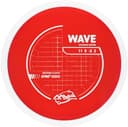
MVP Disc Sports Neutron Wave Disc Golf Distance Driver
The default pick for most players who want a durable, do-everything understable distance driver.
Pros
- Best overall value at roughly $18
- Durable and holds its flight numbers well
- Firm, reliable grip for backhand and forehand
- Wide selection of bright, easy-to-spot colors
Cons
- Beats in slightly understable over time, which not everyone wants
- Opaque-only colors lack the visual flair of premium plastics
Neutron is MVP's standard premium plastic and the version most players should buy first. It is durable, holds its flight characteristics well over time, and comes in a wide range of bright opaque colors. The grip is firm without being slick, which suits both backhand and forehand throwers.
A fresh Neutron Wave flies right to its rated numbers: easy turn, long glide, dependable fade. As it wears in over a season of play, it gets slightly more understable, which many players actually prefer because it extends the turnover even further. If you only buy one Wave, make it this one. It is the baseline against which the other plastics are judged, and at around $18 it is also the best value in the lineup.
This is the variant we recommend for the intermediate player adding their first true distance driver. It is forgiving enough to learn on and durable enough to stay in your bag for years.
MVP Plasma Wave
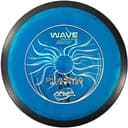
MVP Disc Sports Plasma Wave Disc Golf Distance Driver
Players who want maximum grip and a touch more glide, especially in cold or wet conditions.
Pros
- Grippiest plastic in the Wave lineup, great for cold and wet rounds
- Slightly more glide and turn extends turnover lines
- Beautiful pearlescent, color-shifting finish
- Durable premium polymer
Cons
- Pricier than Neutron at around $23
- The extra understability can be too much for some players
- Gummy feel is a personal preference, not for everyone
Plasma is MVP's premium semi-gummy plastic with a pearlescent metallic sheen. It is the grippiest Wave variant, which makes it the smart pick if you play in cold weather, struggle with grip lock, or simply want the most secure hold on a fast driver.
Because Plasma is slightly gummier and tends to come with a touch more dome than Neutron, the Plasma Wave flies marginally more understable and a hair glidier. The difference is subtle but real. If you found the Neutron version flipping just short of where you wanted, Plasma will extend that turn. If you found Neutron flipping too much, Plasma is not the upgrade for you.
The color-shifting tones look excellent, and the plastic is durable. The trade-off is price, around $23 versus $18 for Neutron, and the fact that the extra understability is not universally desirable. For grip-focused players, though, this is the variant to chase.
MVP Cosmic Neutron Wave
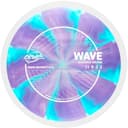
MVP Disc Sports Cosmic Neutron Wave Disc Golf Distance Driver
Players who want Neutron durability with eye-catching swirl patterns and slightly flatter, more stable runs.
Pros
- Unique swirl patterns, every disc is one of a kind
- Same proven Neutron durability and grip
- Tends to run slightly flatter and more stable for added control
- Strong shelf appeal for collectors
Cons
- Costs a few dollars more than standard Neutron
- Production quirk makes flight slightly less understable than rated
- Less ideal if you specifically want a big turnover disc
Cosmic Neutron is the same durable Neutron base plastic, but produced with a multi-color injection process that creates striking swirl patterns. No two discs look the same, which is why this variant is a favorite among collectors and anyone who just wants their driver to stand out.
The flight is rated identically at 11 | 5 | -2 | 2, and for most players it performs like a standard Neutron Wave. Worth noting honestly: many throwers report that Cosmic Neutron runs tend to come out flatter and a touch more stable than regular Neutron, likely a quirk of the production process. In practice that means a Cosmic Neutron Wave may flip a hair less than the Neutron version, which some players prefer for control and others find slightly less helpful for turnovers.
If you love the look and want a Wave that holds a line with a bit more discipline, this is a great pick. If you specifically need maximum understability, the standard Neutron or Plasma versions are safer bets.
MVP Fission Wave
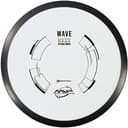
MVP Disc Sports Fission Wave Disc Golf Distance Driver
Lower-power players who want a lightweight, extra-understable Wave for maximum easy distance.
Pros
- Ultralight options make it the easiest Wave to get up to speed
- High GYRO overmold density keeps spin and glide strong despite low weight
- Slightly more understable, ideal for lower-power arms
- Premium grip and durability
Cons
- More vulnerable to headwinds and turning over
- Premium pricing around $23
- Extra understability can be too much for stronger arms
Fission is MVP's most distinctive plastic. It uses microbubble technology to create an ultralight core, with tiny, evenly distributed weight-reduction bubbles. The benefit is that MVP can produce a lighter overall disc while keeping a high-density GYRO overmold relative to that lighter core. In plain terms: you get a lighter disc that still spins and glides like a heavier one.
For the Wave specifically, this makes Fission the most beginner-friendly and lowest-power variant. A lighter Wave is easier to get up to speed, so slower arms get more turn and more distance with less effort. MVP even rates Fission Wave runs at a slightly more understable -2.5 turn. If the standard Neutron Wave fades out a touch early for you, a lighter Fission Wave will likely fix that.
The trade-off is wind. Lighter, more understable discs get pushed around in headwinds and can turn over and roll if you throw them too hard. Fission is also a premium-priced plastic at around $23. But for a developing player chasing easy distance, the Fission Wave is the version that gives you the most help.
Where the Wave Fits in MVP's Driver Lineup
The Wave is one piece of a larger MVP driver family, and understanding the neighbors helps you decide whether you need just the Wave or a small set of MVP drivers that cover different jobs.
The closest comparison is the [MVP Photon](https://www.amazon.com/dp/B07HWZ427Q?tag=pinetreedisc-20), the overstable counterpart at the same Speed 11. Rated roughly 11 | 5 | -1 | 2.5, the Photon resists turn and finishes with a stronger, more dependable fade. It is the disc to throw into a headwind or when you need a controlled hyzer. The Wave and Photon together cover both sides of the wind and both shot shapes at the same speed, which is exactly why a lot of MVP players bag both.
Step down in speed and you reach the [MVP Tesla](https://www.amazon.com/dp/B00JPMYPBY?tag=pinetreedisc-20), a Speed-9 stable-overstable driver. The Tesla is more controllable and accurate for placement shots that do not need full distance-driver speed. Where the Wave wants to turn, the Tesla holds a straighter line with a touch of fade.
Step down again to the [MVP Volt](https://www.amazon.com/dp/B071S65YGH?tag=pinetreedisc-20), a Speed-8 fairway driver. Rated around 8 | 5 | -2 | 1.5, the Volt is essentially the fairway-speed cousin of the Wave: similar understable, glidey personality at a slower, more controllable speed. If the Wave feels like too much disc, the Volt delivers the same friendly flight in a slower package, and many players carry both as a matched understable pair.
The simplest way to think about it: the Volt is your understable fairway driver, the Wave is your understable distance driver, the Photon is your overstable distance driver, and the Tesla covers the controllable middle. If you want to widen your search beyond MVP, our best understable disc golf discs guide covers comparable molds from other brands.
How to Throw the MVP Wave for Maximum Distance
The Wave rewards good technique more than raw strength. Here is how to get the most out of it.
Throw it on a hyzer release. This is the single most important tip. Do not throw the Wave flat or on an anhyzer if you want a clean, long flight. Release it on a hyzer angle, tilted down to the left for a right-handed backhand thrower, and let the disc's understability flip it up to flat. The flip-up is where the magic happens. A well-executed hyzer flip with the Wave produces a long, straight, gliding flight that maximizes distance.
Stay smooth, not violent. Because the Wave is understable, hammering it as hard as you can will just make it turn over and stall or roll. Distance with the Wave comes from a clean, accelerating pull and good spin, not from muscling it. Smooth and snappy beats hard and sloppy every time.
Use a nose-down release. A nose-up release kills glide on any driver, and it especially hurts a glide-5 disc like the Wave. Keep the nose angled slightly down at release so the disc can ride its glide and carry. This alone is often worth 30 to 50 feet.
Adjust your angle for wind. In a tailwind, throw the Wave flatter, since the wind will hold it up and add distance. In a headwind, give it more hyzer than usual or leave it in the bag entirely, because a headwind will exaggerate the turn and can flip it over into a roller.
Match the weight to your arm. A lighter Wave, especially in Fission plastic, is easier to get up to speed and will turn more for you. A heavier Wave resists turn and handles wind better. If you are still building arm speed, go lighter. If you are getting too much turn, go heavier.
MVP Wave FAQ
Is the MVP Wave good for beginners?
Yes, with one caveat. The Wave is one of the most beginner-friendly true distance drivers because its understable flight does not punish a slower arm. That said, complete beginners are often better served starting with slower fairway drivers and midranges to build form first. The Wave is ideal for the advancing beginner or intermediate player ready to add their first Speed-11 driver.
What is the MVP Wave comparable to?
Within MVP's own lineup, the Wave is often described as a longer version of the MVP Inertia, sharing its understable, glidey personality at a higher speed. Across brands, it sits in the same category as other understable Speed-11 distance drivers used for hyzer flips and turnovers.
Will the MVP Wave turn over for power throwers?
Yes. If you throw 400-plus feet, a flat release of the Wave will flip over and likely turn into a roller. Power throwers should use the Wave only as a dedicated roller or extreme-turnover disc, or choose a more stable driver instead.
What plastic should I buy first?
Start with the Neutron Wave. It flies true to the rated numbers, it is durable, and at around $18 it is the best value. Move to Plasma if you want more grip, Cosmic Neutron if you want swirls and slightly more stability, or Fission if you need a lighter, more understable version.
Is the MVP Wave PDGA approved?
Yes. The MVP Wave is PDGA approved for sanctioned tournament play in every plastic variant.
What weight MVP Wave should I throw?
The Wave is available roughly from 155g to 175g. Lower-power players and those wanting more turn should choose lighter weights, around 155g to 165g. Stronger arms and players who want better wind resistance should choose 170g to 175g. Fission plastic offers even lighter options for the slowest arms.
Can I throw the MVP Wave forehand?
Yes. The Wave works well as a forehand turnover or flex disc. Because it is understable, a forehand throw will hold an anhyzer line and finish flat or with a gentle fade. Many sidearm players use the Wave specifically for long, sweeping forehand turnover shots.
Final Thoughts
The MVP Wave earns its spot in a lot of bags for one simple reason: it gives players a true Speed-11 distance driver they can actually throw. Most fast drivers reward power and punish everyone else. The Wave flips that script with easy turn, long glide, and a reliable but gentle fade, and the GYRO overmold gives it a planted, trustworthy feel in the air that helps developing players the most.
If you are an intermediate player building toward faster drivers, or anyone who wants a dedicated hyzer-flip and turnover disc, the Neutron Wave is the version to buy first. It is durable, affordable, and flies true to its numbers. Grip-focused players should look at the Plasma Wave, and lower-power throwers chasing every last foot of easy distance should consider the lighter, more understable Fission Wave.
Just be honest with yourself about your arm speed. If you bomb 400-plus feet, the Wave will turn over on you, and you are better off in the overstable end of the lineup. For everyone else, this is one of the most rewarding distance drivers you can put in your bag.
For more on building out your driver slots, see our best disc golf drivers and best understable disc golf discs guides.
Affiliate Disclosure
This post contains affiliate links. As an Amazon Associate, Pine Tree Disc earns from qualifying purchases at no additional cost to you. Learn more
Isaac "Steaks" Salisbury is the Maine native who founded Pine Tree Disc Golf. He's been throwing plastic through Maine's forests and fairways for years and started Pine Tree to build disc golf gear and content that players can wear and trust on and off the course.
Learn more about Pine Tree Disc →