
Disc Golf Disc Weight Guide: What Weight Should You Throw?

Quick Comparison
| Product | Best For | Price |
|---|---|---|
Beginners who want effortless straight distance and a soft, glidey finish off the tee. | ||
Beginners building accuracy who want a straight, glidey midrange for approaches and tight fairways. | ||
Smaller frames, kids, and slower arms who want maximum distance from a featherweight disc. | ||
Beginners who want one putter for putting and short approaches, where heavier weight actually helps. | ||
Beginners who want their first true distance driver without needing a powerful, fast arm. |


Beginners who want effortless straight distance and a soft, glidey finish off the tee.
Beginners building accuracy who want a straight, glidey midrange for approaches and tight fairways.
Smaller frames, kids, and slower arms who want maximum distance from a featherweight disc.
Beginners who want one putter for putting and short approaches, where heavier weight actually helps.
Beginners who want their first true distance driver without needing a powerful, fast arm.
Want the full picture? Pick up to 4 to compare side by side.
If you have ever flipped a disc over and squinted at the tiny number stamped near the rim, you have run into the most misunderstood spec in the sport: disc golf disc weight. Most discs weigh somewhere between 150 and 176 grams, and that small range causes an outsized amount of confusion. New players assume heavier discs fly farther, pros throw whatever feels right, and the marketing on starter sets rarely explains any of it.
Here is the truth that contradicts the most common advice you will hear at the pro shop: for the vast majority of players, heavier does not mean farther. A lighter disc is easier to get up to speed, flips up for more glide, and travels farther with a relaxed arm. The "throw max weight" advice is great for a 450-foot bomber fighting a headwind, and terrible for someone who just bought their first disc.
This guide breaks down what the weight number actually does, what you should throw based on your arm speed, and how weight interacts with stability and wind. By the end you will be able to pick a weight on purpose instead of grabbing whatever the bin had in stock.
How Disc Weight Is Measured (and What the Numbers Mean)
Disc weight is printed in grams, usually right on the flight plate or the bottom of the rim. The PDGA caps legal discs based on diameter, which is why most drivers top out around 175 to 176 grams. Two terms get thrown around constantly:
- Max weight refers to the heaviest legal version of a mold, typically 173 to 176g for drivers.
- 150-class refers to discs that weigh 159g or less. Manufacturers run special production lines to make these lighter versions.
Everything in between, roughly 160 to 172g, is the "mid weight" zone where most experienced players live. The same mold can come in a wide weight band, and that single number changes how the disc behaves more than most people realize.
How Weight Affects Distance, Stability, Wind, and Control
Weight is not a "better or worse" dial. It is a set of trade-offs, and which way you want to lean depends entirely on your arm speed and the conditions.
Distance. A lighter disc requires less power to reach its optimal speed. If your arm is not yet generating high speed, a lighter disc will simply fly farther because you can actually get it moving. A heavier disc carries more momentum once it is up to full speed, which is why powerful players can squeeze extra glide out of them, but that only applies if you have the arm to launch it.
Stability. Lighter discs flip more readily. A disc that is rated stable at 175g often plays understable at 155g, turning right for a right-handed backhand thrower and giving you that flippy, glidey flight beginners love. Heavier versions of the same mold hold their line longer and fade harder at the end.
Wind. This is where heavier weight earns its keep. A light, understable disc gets shoved around by gusts and can turn over and burn into the ground. In wind, weight equals control. If you play somewhere consistently breezy, a slightly heavier disc resists the wind and finishes predictably.
Control and feel. Lighter discs are easier to throw accurately at slower speeds, which makes them forgiving for developing form. Heavier discs feel more planted in the hand and reward a clean, powerful release with consistency.
What Beginners Should Actually Throw
If you are new, throw lighter. Aim for the 150 to 160 gram range for your drivers and fairways. Here is why this matters more than anything else in this guide:
- You will get noticeably more distance, because you can actually bring the disc up to speed.
- The disc will turn and glide instead of fading hard left and dumping into the ground 150 feet away.
- Lighter discs teach you to throw with finesse and snap rather than muscling everything.
The single most common mistake new players make is throwing a max-weight, overstable driver because someone told them it was a "good disc." It fades out of their hand every time, and they conclude they are bad at the sport. They are not. They are throwing the wrong weight. Drop down to 155g of understable plastic and watch your distance jump.
Putters are the exception, and we will cover that below.
Arm Speed Is the Real Variable
Forget your skill level for a second and think about arm speed. That is what actually determines the right weight.
- Lower arm speed (most beginners, many casual players, kids, and players returning after time off): lean light, 150 to 160g. You need the disc to get up to speed without forcing it.
- Moderate arm speed (intermediate players developing form): a mix works. Try 160 to 168g so you get some wind resistance without sacrificing all your glide.
- High arm speed (advanced players who throw 350-plus feet): max weight, 170 to 176g, gives you the control and wind resistance to match your power.
If you can rip a disc hard enough to flip a stable disc into the ground at 175g, you have the arm to benefit from heavy plastic. If you cannot, you are leaving distance on the table by throwing heavy.
Putters vs. Drivers: Weight Works Differently
The light-is-better logic mostly applies to discs you throw for distance: drivers and fairways. Putters play by different rules.
For putting, most players actually prefer max weight, usually 170 to 175g. A heavier putter resists wind near the basket, where accuracy matters most, and it has a consistent, planted feel coming off your hand on short putts. The few feet of "distance" you lose are irrelevant when you are 25 feet out.
For midranges, the answer is in between. Many beginners do well with a lighter midrange in the 165 to 170g range for approach shots, dropping lighter still if they want extra turn. Once your form develops, a max-weight midrange gives you a dead-straight, wind-resistant workhorse.
For drivers and fairways, this is where going light pays the biggest dividends for newer and slower-armed players.
Recommended Weight by Player Type
Use this as a starting point, then adjust based on how the disc flies for you:
Player / Use Case: Brand-new beginner (drivers/fairways) | Recommended Weight: 150 - 160g | Why: Easier to speed up, more glide and distance
Player / Use Case: Beginner putter | Recommended Weight: 168 - 175g | Why: Wind resistance and a planted feel for accuracy
Player / Use Case: Intermediate (all distance discs) | Recommended Weight: 160 - 168g | Why: Balance of glide and wind control
Player / Use Case: Advanced / high arm speed | Recommended Weight: 170 - 176g | Why: Maximum control and consistency at high power
Player / Use Case: Windy conditions (any level) | Recommended Weight: Go heavier within your range | Why: Weight fights the wind
Player / Use Case: Kids and lower-power players | Recommended Weight: 145 - 155g | Why: Lightest discs fly far with little effort
Recommended Lightweight Discs for Beginners
Picking the right weight is only half the battle. You also want molds that are forgiving by design. Here are five discs I recommend across every slot in your bag: a putter, a midrange, two fairway drivers, and an understable distance driver. Every one of them is glidey, easy to throw straight, and comes in lighter runs that make it even more beginner-friendly. Buy the drivers and mids in the 150 to 160g range, keep the putter on the heavier end around 170 to 175g, and you will feel the difference immediately.
Innova Leopard
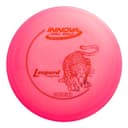
Innova Leopard
Beginners who want effortless straight distance and a soft, glidey finish off the tee.
Pros
- Low speed means it flies far without a powerful arm
- High glide carries the disc for extra distance
- Excellent for learning straight, controlled lines
- Lightweight versions amplify the easy, flippy flight
Cons
- Too understable to fight a strong headwind
- Advanced players will out-power it quickly
The Leopard is the disc I hand to almost every new player who tells me their drives nosedive into the ground. With a speed of 6 it does not demand a big arm, and the high glide combined with the -2 turn means it flips up to flat and sails. In a lighter weight it becomes even flippier, giving you that long, straight push that builds confidence fast.
Get it in DX plastic if you want the cheapest option and do not mind it beating in (a beat Leopard becomes a fantastic turnover and roller disc). Choose Star or GStar if you want it to hold its stability longer. Either way, at 150 to 158g this is one of the easiest fairway drivers in the sport to throw far.
Dynamic Discs Truth
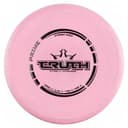
Dynamic Discs Truth
Beginners building accuracy who want a straight, glidey midrange for approaches and tight fairways.
Pros
- Straight flight with a gentle, predictable finish
- High glide makes approaches and short drives easy
- Affordable in Prime plastic, durable in Lucid
- Lighter weights make it even easier to throw straight
Cons
- Not stable enough for strong wind
- Less distance than a dedicated fairway driver
Every bag needs a reliable midrange, and the Truth is one of the most forgiving you can start with. At speed 5 with a -1 turn and just 1 fade, it flies dead straight with a tiny, predictable finish. It will not dump hard left on you the way an overstable midrange does, which is exactly what a developing arm needs.
In the budget Prime plastic at a lighter weight, the Truth glides effortlessly and rewards a clean release without punishing a slightly off-axis throw. As your form improves you can step up to Lucid plastic and heavier weights for a straight, wind-resistant workhorse. It genuinely grows with you, which is rare in a beginner disc.
Latitude 64 Diamond
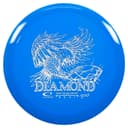
Latitude 64 Diamond
Smaller frames, kids, and slower arms who want maximum distance from a featherweight disc.
Pros
- Built specifically as a lightweight, easy-to-throw driver
- Huge glide turns slow arm speed into real distance
- Widely available in 150g and lighter runs
- Excellent first "distance" disc for kids and smaller players
Cons
- Very understable, so it turns and burns in a headwind
- Stronger arms will flip it over too easily
If there is one disc that proves the power of going light, it is the Diamond. It is purpose-built as a lightweight fairway driver, and most retailers stock it in the 150g and even sub-150g range. At a speed of 8 with a -3 turn and a ton of glide, a light Diamond practically floats off your hand and holds a long, gentle turnover that adds serious distance for a developing arm.
This is my go-to recommendation for younger players and anyone fighting to get a driver up to speed. Throw it in a 150-class Gold or Zero plastic and it will out-distance heavier, faster molds you simply cannot bring up to full speed yet. As your arm strengthens, a slightly heavier Diamond stays useful as a dependable turnover and roller disc.
Innova Aviar
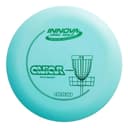
Innova Aviar
Beginners who want one putter for putting and short approaches, where heavier weight actually helps.
Pros
- The benchmark putter that taught the sport to putt
- Heavier weight resists wind and steadies your stroke
- Cheap and available in every plastic and weight
- Doubles as a reliable straight approach disc
Cons
- Too slow to throw for any real distance
- Beginners often buy it too light, losing the wind resistance
The Aviar is the most-thrown putter in disc golf history, and it is the perfect disc to demonstrate that lighter is not always better. For putting and short approaches you want the opposite of a driver: a heavy, stable disc that resists wind and ignores a little extra hand speed. Buy the Aviar at max weight, around 170 to 175g, and it will hold a dead-straight line into the chains.
A heavier putter punches through wind, deadens off the basket instead of bouncing away, and gives you the consistent feel that good putting is built on. This is the one slot in your bag where you should stop chasing light plastic. Grab a DX Aviar to start, and step up to Star or KC Pro once you know you love the feel.
Innova Sidewinder
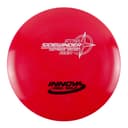
Innova Sidewinder
Beginners who want their first true distance driver without needing a powerful, fast arm.
Pros
- The easiest Innova distance driver to bring up to speed
- High glide and turn create distance for slower arms
- Lightweight runs make it even more beginner-friendly
- A natural step up once the Leopard feels too slow
Cons
- Understable flight rolls or turns over in wind
- Faster arms will overpower it within a season
Most new players reach for a high-speed distance driver far too early, and a heavy, overstable one just fades into the ground at their feet. The Sidewinder is the fix. At speed 9 it is the most approachable distance driver Innova makes, and the -3 turn means a moderate arm can get it up to flat and let the glide do the work. In a 150-class weight it becomes even more forgiving and adds noticeable distance.
Think of it as the distance-driver version of the Leopard. Throw it on a slight hyzer, watch it flip to flat and ride a long, easy turnover, and you will get your first taste of real distance without muscling anything. As you build power, heavier Sidewinders and more overstable drivers can join the bag, but this is the one that teaches the flight.
How to Choose Your Weight in Practice
Do not overthink your first purchase. Start light, throw it a lot, and let the disc tell you what it needs.
- Start in the 150 to 160g range for any driver or fairway if you are new or have a slower arm.
- Watch the flight. If the disc turns over and rolls or burns into the ground every time, go up a few grams or pick a more stable mold. If it fades hard left and falls short, you went too heavy or too overstable, so go lighter.
- Account for your weather. Play somewhere windy? Bias toward the heavier end of your range.
- Keep putters heavy. Around 170 to 175g for the feel and wind resistance where accuracy counts.
The goal is a disc you can throw at 80 percent effort and watch fly straight. If you are muscling every shot, the disc is too heavy or too stable for your current arm.
Common Questions About Disc Weight
Does a heavier disc go farther?
Not for most players. Heavier discs carry more momentum once they are up to full speed, but only high-arm-speed players can get them there. For everyone else, a lighter disc flies farther because it is easier to bring up to speed.
Is the "throw max weight" advice wrong?
It is right for advanced players and windy rounds, and wrong for beginners. Max weight gives control and wind resistance to players who already have the power to use it. New players almost always do better dropping down to 150 to 160g.
What weight should a putter be?
Most players prefer max-weight putters, around 170 to 175g, because the extra weight resists wind and gives a consistent, planted feel on short putts where accuracy matters more than distance.
Will a lighter disc be less durable?
Slightly. Lighter discs have thinner flight plates and can warp or beat in faster, especially in soft base plastics. Premium plastic lines hold their shape longer if durability is a concern.
What does 150-class mean?
It refers to discs weighing 159g or less. Manufacturers produce these lighter versions specifically for players who want more glide, more turn, and easier distance.
Do lighter discs fly less stable?
Yes. The same mold flips more easily at a lighter weight, so a stable disc can play understable when it is light. That is a feature for beginners chasing distance and a drawback in the wind.
Final Thoughts
Disc golf disc weight is not about chasing the heaviest plastic the rack will sell you. It is about matching the disc to your arm. If you are new or your drives keep fading short, the fastest improvement you can make is dropping to a lighter, understable disc in the 150 to 160 gram range. You will see more distance, straighter lines, and a lot less frustration.
Start with a lightweight Innova Leopard for the tee and a Dynamic Discs Truth for the fairway, keep your putter heavy, and let the flights guide your adjustments. Throw the right weight and the game gets easier almost overnight.
Affiliate Disclosure
This post contains affiliate links. As an Amazon Associate and an Infinite Discs affiliate, Pine Tree Disc earns from qualifying purchases at no additional cost to you. Learn more
Editorial Independence
Our picks are chosen on the merits. We don't accept payment to feature specific products, and commission rates don't influence what we recommend or how we rank it.