
Best MVP Discs: The Standout Molds Worth Bagging in 2026

Quick Comparison
| Product | Best For | Price |
|---|---|---|
A do-everything control driver that holds a long straight line with a dependable forward fade. | ||
A first fairway driver that flies straight and far without demanding a big arm. | ||
The next step up from a beginner fairway, with a touch more fade for control. | ||
A high-speed distance driver that lower-power players can actually get full flights from. | ||
A workhorse distance driver that resists wind and finishes reliably. | ||
Maximum distance for advanced arms who want a slow, controlled turn. | ||
A neutral-stable midrange that holds any line you put it on. | ||
A straight, floaty putter that doubles as a long-gliding approach disc. |


A do-everything control driver that holds a long straight line with a dependable forward fade.
The next step up from a beginner fairway, with a touch more fade for control.
A high-speed distance driver that lower-power players can actually get full flights from.
Want the full picture? Pick up to 4 to compare side by side.
If you are shopping for the best MVP discs, the first thing to understand is what makes them different. MVP Disc Sports builds every disc with GYRO Overmold Technology, a two-piece design that fuses a lightweight inner core to a denser outer rim. The result is a disc with more rotational stability and a flight that finishes the same way shot after shot. Once you feel a GYRO disc hold its line through a headwind, the appeal clicks.
Here is the insider note most buyers miss: MVP and Axiom are sister brands, both owned by MVP Disc Sports, and they share the same overmold technology. Axiom tends to lean a touch flashier and more beginner-friendly, while the MVP line skews toward control and consistency. A few molds in this guide (like the Crave) technically live under the Axiom badge but belong in any MVP-focused bag, because the engineering is identical. We are picking the best discs across the whole MVP Disc Sports family, not just the ones with the MVP logo.
This guide cuts through the full lineup and names the molds actually worth your money across every category - fairway, distance, midrange, and putter. We lead with the verdict on each, give you real flight numbers, and tell you honestly who each disc is for and who should skip it. Discs link to Infinite Discs as our preferred retailer, with Amazon as a backup where the mold is in stock.
Quick Picks: Best MVP Discs at a Glance
- Best Overall: MVP Volt - a control fairway driver that does almost everything, with that signature dead-straight GYRO finish.
- Best Value: MVP Reactor - a neutral-stable midrange that fills the most slots in your bag for the least money.
- Best for Beginners: Axiom Crave - a slow, glidey, forgiving fairway that flies straight even with a developing arm.
How to Choose the Right MVP Disc
MVP organizes its lineup by rim width and speed class, the same way every disc maker does, but the GYRO design changes how you should think about stability. Because the overmold resists turning over, MVP discs tend to fly a hair more stable than their numbers suggest, especially in premium plastics. If you are between two molds, the lower-speed one is almost always the smarter pick.
Start with the four flight numbers: speed, glide, turn, and fade. Speed tells you how much arm you need. Glide is how long the disc stays aloft. Turn (a negative number) is the high-speed tendency to bank right for a right-handed backhand thrower, and fade is the low-speed finish back to the left. Beginners want lower speed, higher glide, and a turn around -1 to -2 so the disc flies straight without raw power.
Plastic matters too. MVP's Neutron and Proton are durable premium blends that hold their flight for years. Electron is the grippier baseline putter plastic. Fission is microbubble plastic that hits lighter weights, which makes it a great beginner option because a lighter disc is easier to throw far. When a mold comes in multiple plastics, the flight numbers stay roughly the same - you are choosing feel and durability, not flight.
MVP Volt (Best Overall)
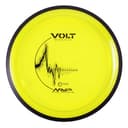
MVP Neutron Volt
A do-everything control driver that holds a long straight line with a dependable forward fade.
Pros
- Reliable straight-to-fade flight that repeats every throw
- Versatile enough for tee shots, gap shots, and approaches
- Holds the line under wind thanks to GYRO stability
- Available in nearly every MVP plastic and weight
Cons
- Not a maximum-distance disc for stronger arms
- The subtle fade can surprise players expecting a dead-straight finish
The Volt is the disc we hand to anyone asking where to start with MVP. At speed 8 it sits right in the fairway-driver sweet spot, and the -0.5 turn paired with a 2 fade gives you a clean straight flight that ends with a predictable, gentle finish. It is not a long-bomb disc and it is not trying to be. It is a placement tool you can trust on tight fairways and gap shots.
What makes the Volt special is the consistency. Throw it flat and it goes straight. Throw it on a slight hyzer and it holds the angle. The GYRO overmold keeps it from flipping over even when you put extra power behind it, which is exactly what you want from a control driver. Intermediate players will get the most out of it, but a developing arm can throw it too in lighter Fission plastic.
Axiom Crave (Best for Beginners)
Pros
- Extremely forgiving with a low power requirement
- Long glide for its speed class
- Minimal fade keeps shots near your target line
- Grows with you as your arm develops
Cons
- Too understable for power throwers who want a workhorse
- Will turn over in a stiff tailwind if you overpower it
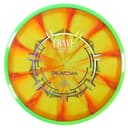
The Crave wears the Axiom badge, but since Axiom is MVP's sister brand running the same GYRO tech, it belongs in this conversation - and it is the single best first driver in the lineup. At speed 6.5 with a -1 turn and only 1 fade, it asks very little of you. New players can throw it flat and watch it glide long and straight instead of dumping out to the left like an overstable disc would.
The genius of the Crave is its ceiling. Beginners throw it straight, intermediates shape gentle turnovers with it, and advanced arms use it for precise placement when they do not want fade. That low fade number means it finishes soft, so your misses stay closer to your intended line. In lighter Fission weights it is even more forgiving. If you buy one disc to learn fairway-driver form, make it this one.
MVP Servo
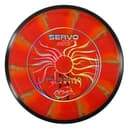
MVP Neutron Servo
The next step up from a beginner fairway, with a touch more fade for control.
Pros
- Low power requirement with a more controlled fade than the Crave
- Excellent grip and durability in Neutron and Plasma
- Predictable flight that helps developing players trust their form
Cons
- Fewer plastic options than other MVP fairways
- Stronger arms may find it too tame for distance
The Servo slots neatly between the Crave and the Volt. It shares the Crave's manageable speed 6.5 and high glide, but it adds a full 2 of fade, so it finishes more reliably to the left. That makes it the disc to grab when you have outgrown the understable feel of a true beginner driver and want something that resists turning over on a windy day.
We like the Servo for players in the late-beginner to early-intermediate stage who are starting to shape shots. It holds a flat line then fades home predictably, which builds confidence. Throw it on a hyzer and it tracks the angle cleanly. It is a quiet, dependable disc that does not get talked about as much as it should.
MVP Wave
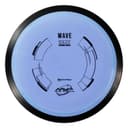
MVP Neutron Wave
A high-speed distance driver that lower-power players can actually get full flights from.
Pros
- Easy distance for moderate-power throwers
- Flips up to flat and glides for a long, controlled finish
- Great for hyzerflips, turnovers, and tailwind shots
- Still useful for advanced arms on shaped lines
Cons
- Will turn and burn if a strong arm overpowers it
- Not the disc for a dead-straight or overstable line
The Wave is the distance driver to reach for if you do not have a 400-foot arm yet. At speed 11 with a -2 turn, it rewards moderate power with long, glidey turnovers and easy hyzerflips instead of punishing you with early fade. Lower-power throwers will get a full flight out of it, which is exactly what most high-speed drivers fail to deliver for the average player.
Stronger arms still have plenty of use for the Wave on big anhyzer lines, wooded turnovers, and tailwind shots. The 2 fade keeps it from being a pure roller disc, so it always finishes with a little shape. Think of it as the understable counterpart to the Octane in MVP's distance lineup.
MVP Photon
Pros
- Stable, wind-resistant flight with a dependable fade
- Pairs perfectly with the understable Wave
- Holds its line in headwinds where other drivers turn
- Long flights for power throwers without flipping over
Cons
- Needs real arm speed to reach full distance
- Too overstable for low-power players to get full flights
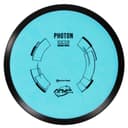
The Photon is the Wave's more dependable sibling. Same speed 11, but with only -1 turn and a heftier 2.5 fade, it is the distance driver you trust when the wind picks up. Power throwers can squeeze a little flight-extending turn out of it, while everyone else gets a long, stable flight with a sure finish back to the left.
MVP describes the Photon as a longer Tesla, and that is accurate. It is headwind resistant by nature, so it shines on exposed courses and into the wind. If your bag already has the understable Wave and you want a stable partner that covers the opposite shot shape, the Photon is the obvious pairing. We would steer beginners away from it until they have the arm speed to make a speed-11 driver fly properly.
MVP Octane
Pros
- Top-end distance for high-power throwers
- Slow, controlled turn that holds straight before fading
- Stable enough to trust in mild wind
- Wide plastic and weight selection
Cons
- Requires a strong arm to fly at all
- The wrong pick for beginners or moderate-power players
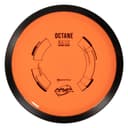
The Octane is MVP's high-speed bomber. At speed 13 it demands the most power of anything in this guide, and in return it delivers the longest flights. The -1 turn is slow and controlled rather than flippy, so the disc holds long and straight before its 2 fade brings it home. This is a distance driver for players who already throw far and want more.
Do not buy the Octane to learn distance form - you will not generate the speed to make it fly, and it will just fade out short. But if you have the arm and want a reliable long-range driver that does not turn over on you, the Octane earns its spot. It is the faster, more stable cousin to the Wave in the same understable family.
MVP Reactor (Best Value)
Pros
- Genuinely straight flight that holds any angle
- Versatile for backhand and forehand approaches
- Forgiving for all skill levels
- Lowest price in this guide
Cons
- Not overstable enough for heavy wind or big forehand power
- Lacks the extra fade some players want for approach precision
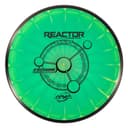
The Reactor is the best value in the MVP lineup because it fills more slots in your bag than any other single mold. With balanced 5 glide and a -0.5 turn, it is a true neutral-stable midrange - throw it flat and it flies straight, throw it on hyzer and it holds, and it finishes with a controlled 1.5 fade. It is the classic flat-to-fade midrange shot, the one you need more than any other.
Lower-power players get an honest, dependable flight, while big arms can coax a subtle turn out of it without overpowering the fade. It carves tight wooded gaps and handles clean forehand approaches with equal ease. If you can only own one MVP midrange, this is it, and at around sixteen dollars it costs less than the drivers.
MVP Atom

Pros
- Dead-straight flight with a soft, predictable finish
- Long glide for distance putts and approaches
- Clean beadless feel in the hand
- Works as both a putting and throwing putter
Cons
- Not stable enough to fight strong wind
- Beadless feel is not for players who prefer a bead
The Atom is MVP's straight-flying putt and approach disc, and it is one of the most controllable putters in the lineup. With neutral 0 turn and only 1 fade, it flies dead straight with a gentle finish, then beats in over time to an even straighter, floatier flight. The beadless design and low 10mm rim feel clean on release.
In baseline Electron plastic it makes an excellent putting putter that seasons into a reliable straight flyer. In premium Neutron, Proton, or Plasma it shines as a throwing putter for straight drives and long approaches, where its large plate and narrow wing produce an unusually long gliding line. If you want a putter you can putt with and throw with, the Atom does both well. Players who want a more overstable, wind-fighting option should look at the beaded Ion instead.
Building an MVP Bag Around These Discs
You do not need all eight. A strong starter MVP bag is three discs: the Axiom Crave for distance off the tee, the MVP Reactor for midrange, and the MVP Atom for putting and approaches. That covers every shot a developing player faces, and all three are slow enough to fly with a modest arm.
As your distance grows, add the MVP Volt for controlled fairway shots and the MVP Wave for your first real distance driver. Once you can throw a speed-11 disc properly, the MVP Photon gives you a stable, wind-fighting partner. Save the MVP Octane for when your form is dialed and you are chasing maximum distance.
Common Questions About MVP Discs
Are MVP and Axiom really the same company?
Yes. Both are owned by MVP Disc Sports and share the GYRO Overmold Technology. Axiom typically runs flashier plastics and slightly more beginner-friendly molds, while MVP leans toward control and consistency. The engineering and quality are identical, so it is fine to mix both brands in one bag.
What is GYRO overmold technology?
It is MVP's two-piece construction that bonds a lightweight inner core to a denser outer rim. This shifts more weight to the perimeter, which increases rotational stability and gives the discs a flight that resists turning over and finishes the same way every time.
Which MVP plastic should a beginner buy?
Fission is a great choice because its microbubble core hits lighter weights, and a lighter disc is easier to throw far while you build form. Neutron and Proton are durable premium blends that hold their flight for years. For putters, baseline Electron offers the grippiest feel.
Are MVP discs good for beginners?
Some are. The Crave, Servo, Reactor, and Atom are all forgiving and low-power. Avoid the high-speed Octane and Photon until you have the arm speed to make a speed-11-to-13 driver fly, or they will just fade out short.
Final Thoughts
The best MVP discs are not the fastest or the flashiest - they are the ones that fly the same way every single time, which is exactly what the GYRO overmold is built to do. If you are starting out, build around the Axiom Crave, MVP Reactor, and MVP Atom. If you want one disc that does almost everything, the MVP Volt is our overall pick and the truest expression of what makes this brand great.
Buy any of these from Infinite Discs to get the widest plastic and weight selection, and your form will thank you for choosing discs that match your arm instead of your ego.
Affiliate Disclosure
This post contains affiliate links. As an Amazon Associate and an Infinite Discs affiliate, Pine Tree Disc earns from qualifying purchases at no additional cost to you. Learn more
Editorial Independence
Our picks are chosen on the merits. We don't accept payment to feature specific products, and commission rates don't influence what we recommend or how we rank it.