Trilogy Disc Golf Explained: Latitude 64, Dynamic Discs, Westside

Quick Comparison
| Product | Speed↑ | Glide↑ | Turn↑ | Fade↑ | Best For | Price |
|---|---|---|---|---|---|---|
| 8 | 6 | -3 | 1 | A brand-new player's first driver, thrown light for easy distance. | Check Price | |
| 7 | 7 | -1 | 1 | A controllable, high-glide fairway driver that grows with you from beginner to advanced. | Check Price | |
| 2 | 4 | 0 | 1 | A do-everything putter that putts, drives, and approaches with zero drama. | Check Price | |
| 5 | 5 | -1 | 1 | The straight-flying midrange that anchors a bag and handles most mid-range shots. | Check Price | |
| 4 | 3 | 0 | 3 | An overstable approach putter that fights wind and finishes reliably left. | Check Price | |
| 3 | 3 | -1 | 1 | A soft, straight putting putter for players who prefer a touch of glide and turn. | Check Price |


A brand-new player's first driver, thrown light for easy distance.
Check Price on AmazonA controllable, high-glide fairway driver that grows with you from beginner to advanced.
Check Price on AmazonA do-everything putter that putts, drives, and approaches with zero drama.
Check Price on AmazonThe straight-flying midrange that anchors a bag and handles most mid-range shots.
Check Price on AmazonAn overstable approach putter that fights wind and finishes reliably left.
Check Price on AmazonA soft, straight putting putter for players who prefer a touch of glide and turn.
Check Price on AmazonHere is the verdict up front: "Trilogy" is not a single disc golf brand. It is the nickname for three sister companies - Latitude 64, Dynamic Discs, and Westside Discs - that are owned and operated together and pressed in the same Latitude 64 factory in Sweden. If you have thrown a disc from any one of them, you have thrown a Trilogy disc. Many newer players spend a year buying from all three before they realize they have been supporting one company the whole time.
That connection matters more than trivia. Because the three brands share a factory, share plastic blends, and coordinate their lineups, you can build an entire bag from across all three and know the plastics will feel consistent and the molds will not overlap awkwardly. The brands are positioned to complement each other, not compete: one leans polished and controllable, one leans beginner-friendly, one leans pro-tour aggressive.
This guide explains what trilogy disc golf actually means, how the three brands differ, and which specific discs are worth buying from each. If you are still comparing manufacturers, our disc golf brands guide covers the wider landscape, and our Axiom Discs review breaks down the other big multi-brand family.
What Is Trilogy Disc Golf?
Trilogy disc golf refers to the partnership between Latitude 64, Dynamic Discs, and Westside Discs. Here is the actual structure, because it confuses people:
Latitude 64 is a Swedish company that builds and operates the manufacturing facility in Kalmar, Sweden. Dynamic Discs started as a US-based retailer and disc company. Westside Discs began as its own brand. Over time the three became formally linked - Dynamic Discs and Westside are tied to the same ownership group as Latitude 64, and crucially, all three brands' discs are physically pressed at the Latitude 64 plant in Sweden. Different stamps, different mold catalogs, one factory.
That shared production is why the plastics feel familiar across brands. Latitude 64's Opto, Dynamic Discs' Lucid, and Westside's VIP are all premium translucent blends made in the same building. The base-line plastics line up the same way: Latitude 64 Zero, Dynamic Discs Prime, and Westside Origio are all grippy, affordable beginner plastics with comparable feel.
The most visible expression of the partnership is the Trilogy Challenge, an annual series of grassroots events run at courses around the world. The format is the hook: every player throws the same three discs - one new release from each of the three brands - and the entry fee includes those discs plus a disc golf bag or other gear. It is built to be a beginner's first tournament and a showcase for the three lineups at once. If you have seen a flyer for a "Trilogy Challenge" at your local course, that is the partnership in action.
So when someone says "trilogy disc golf," they mean this three-brand family. You do not buy a disc stamped "Trilogy." You buy a Latitude 64, Dynamic Discs, or Westside disc, and the Trilogy label is the umbrella over all three.
Quick Picks: Best Trilogy Discs at a Glance
- Best Beginner Disc: Latitude 64 Diamond - a featherweight understable driver that flies far on slow arm speed
- Best Putter: Dynamic Discs Judge - a beadless, stable putter that does everything and feels right in any hand
- Best Midrange: Dynamic Discs EMAC Truth - a controllable straight-to-stable mid that anchors most bags
- Best Driver: Latitude 64 River - a high-glide fairway driver that turns easy distance into a repeatable shot
Latitude 64: Polished and Controllable
Latitude 64 is the parent of the trilogy and the brand with the most refined feel. Its molds tend to be smooth, controllable, and forgiving without being floppy. The Opto premium plastic is one of the better grips in disc golf - durable but not slick - and Latitude's lineup is heavy on glide-forward fairway drivers and clean-flying putters.
If you value discs that do exactly what you ask without surprises, Latitude 64 is the brand to lean on. It is the choice for players who want control over raw power. The Pure, the River, and the Diamond below are three of the most-thrown molds in the sport for exactly that reason.
Dynamic Discs: Beginner-Friendly and Accessible
Dynamic Discs is the most approachable brand of the three. Its marketing, its starter sets, its events, and its mold lineup are all aimed at getting new players into the sport and keeping them comfortable. Prime plastic is cheap and grippy, the disc names are plain English instead of cryptic, and the brand runs more grassroots outreach than almost anyone.
That accessibility does not mean the discs are basic. The Judge and the EMAC Truth are bag staples for advanced players too. But if you are buying a first set or shopping for a friend who just got into the game, Dynamic Discs is the safe, friendly default. Our beginner disc guide leans on several Dynamic molds for this reason.
Westside Discs: Pro-Tour Molds
Westside Discs is the most aggressive of the three brands. Its catalog skews toward overstable, tour-tested molds built for power players and windy conditions, and the brand has long backed touring pros whose feedback shapes the lineup. VIP plastic is stiff and durable, holding its stability through hundreds of rounds.
Westside also has a streak of fun: disc names pull from mythology and fantasy, and the brand is not afraid of extreme flight numbers. The Harp below is a great example - a putter so overstable it doubles as a utility approach disc. Westside is the brand you reach for when you want a disc to fight back against the wind.
The Best Trilogy Discs to Buy
Latitude 64 Diamond
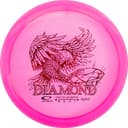
Latitude 64 Opto Diamond
A brand-new player's first driver, thrown light for easy distance.
Pros
- Genuinely easy distance for slow arm speeds
- High glide keeps it airborne with minimal power
- Forgiving on off-axis or rounded releases
- Excellent value at a beginner-friendly price
Cons
- Powerful players will flip and roll it
- Not a wind-fighting disc
- You will outgrow it as a main driver
The Diamond is the single best entry point into trilogy disc golf for a beginner. It is part of Latitude 64's Easy to Use line, and it is built around one idea: help a player with low arm speed get a disc to fly far and straight without fighting it. The -3 turn and a glide rating of 6 mean the Diamond floats and gently turns over on a soft throw, so instead of dumping left at your feet, it carries down the fairway.
The trick that makes the Diamond shine is weight. Throw it in the 150-160g range, or lighter in Opto Air, and it becomes almost effortless to get distance from. Heavier discs need more power to activate; a light Diamond rewards a smooth, slow throw. It is the disc I hand to anyone learning, because the first time it sails 200 feet on a clean release, they are hooked.
The honest limitation: as your arm speed grows, the Diamond will turn over too much and roll. That is not a flaw, it is a graduation signal. Most players keep it for tailwind shots and rollers long after they outgrow it as a primary driver.
Latitude 64 River
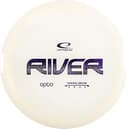
Latitude 64 Opto River
A controllable, high-glide fairway driver that grows with you from beginner to advanced.
Pros
- Class-leading glide turns power into distance
- Straight, controllable flight that suits most arm speeds
- Ideal disc for learning the hyzer flip
- Holds up across skill levels, so you will not replace it soon
Cons
- Not stable enough for strong headwinds
- Advanced power throwers may want a more overstable companion
- Light weights can turn over too easily for big arms
If the Diamond is the disc you learn on, the River is the disc you keep. It is the best driver in the trilogy lineup for most players because it threads a rare needle: easy enough for an improving beginner, useful enough for an advanced player. The headline number is glide - a 7 - which is one of the highest in any fairway driver. That glide turns moderate power into surprising distance.
The -1 turn makes the River flip up to flat on a normal throw and hold a long, straight, gliding line before a gentle fade. It is the disc you throw when the fairway is open and you just want maximum distance with minimum risk. For a slower arm it will turn a touch more; for a faster arm it stays straighter. Either way it finishes predictably.
The River is also a fantastic teaching tool for the hyzer flip. Throw it on a slight hyzer angle, and the disc stands up, flies flat, and glides - the single most useful shot shape a developing player can learn. Pair it with the Diamond and you have a complete beginner-to-intermediate driver progression from one brand.
Dynamic Discs Judge
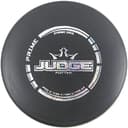
Dynamic Discs Prime Judge
A do-everything putter that putts, drives, and approaches with zero drama.
Pros
- Straight, predictable flight that builds putting confidence
- Genuinely versatile - putts, approaches, and drives well
- Comfortable beadless-feeling rim for most hands
- Cheap enough to buy a matched stack
Cons
- Prime plastic wears faster than premium blends
- A pure-overstable player may want more fade
- So neutral that it can feel unremarkable next to flashier putters
The Judge is the most important disc in the Dynamic Discs catalog and one of the best putters in disc golf, full stop. It won Disc of the Year honors when it launched, and more than a decade later it is still a top recommendation. The flight numbers tell the story: 2 glide-heavy speed, a flat 0 turn, and just 1 fade. That means it flies straight, finishes gently, and does not surprise you.
What makes the Judge special is versatility. As a putting putter it is stable and predictable in the chains. As a throwing putter it holds a straight line for approach shots and short drives. The slight 1 fade gives it just enough finish to be reliable in light wind without being so overstable it dumps left. It has a small bead and a comfortable, medium-depth rim that fits a wide range of hand sizes.
Prime plastic is the budget base blend, which is part of the appeal. At around $13 you can buy a stack of Judges, learn to putt with a consistent disc, and not worry about losing one in the woods. If you want a firmer or more durable feel, the Judge also comes in Lucid premium plastic - same flight, longer-lasting grip.
Dynamic Discs EMAC Truth
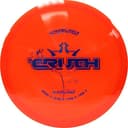
Dynamic Discs Lucid EMAC Truth
The straight-flying midrange that anchors a bag and handles most mid-range shots.
Pros
- Straight, accurate flight with a dependable late fade
- Holds its stability for hundreds of rounds in Lucid plastic
- Versatile across hyzer, flat, and anhyzer lines
- A true bag anchor for any skill level
Cons
- Not overstable enough for heavy wind
- Premium-only pricing in Lucid (Prime version is cheaper)
- New players may not appreciate a midrange until later
Every bag needs a reliable straight midrange, and the EMAC Truth is the one I reach for from the trilogy lineup. It is the touring-pro-tuned version of the original Truth, designed with input from Eric McCabe, and it dials in a flight that is straight off the tee with a touch of late, dependable fade. The 5/5/-1/1 numbers describe a disc that does not fight you.
What earns the EMAC Truth a permanent bag slot is repeatability. Throw it flat and it holds a laser line before settling left at the end. Throw it on a slight anhyzer and it will hold the turn. Throw it on a hyzer and it fades predictably. It is the kind of disc that lets you focus on your form, because the disc itself is never the variable.
Lucid plastic is Dynamic's premium translucent blend - durable, grippy, and slow to wear, so the EMAC Truth keeps its flight numbers for a long time. New players sometimes overlook midranges in favor of drivers, which is a mistake. A controllable midrange like this one saves more strokes than a fast driver you cannot control. Compare it against the Innova classics in our best Innova discs guide if you want a cross-brand reference point.
Westside Discs Harp

Westside Discs Origio Harp
An overstable approach putter that fights wind and finishes reliably left.
Pros
- Bombproof overstability that never turns over
- Excellent for forehands and windy-day approaches
- Dependable, repeatable hard fade
- Inexpensive in Origio base plastic
Cons
- Too overstable to use as a putting putter for most players
- Slow arms may find the fade too aggressive for long shots
- A specialist disc, not an all-rounder
The Harp is the disc that best shows off Westside's pro-tour personality. It is technically a putter, but with a 3 fade it flies more like an overstable utility disc. You will not putt with the Harp very often. You throw it - and that is exactly the point.
When you need a short approach shot to stop dead, a forehand that resists turning over, or a putter-speed disc that holds its line into a stiff headwind, the Harp delivers. The strong fade means it finishes hard left (for a right-handed backhand) every single time, which is what makes it so trustworthy. Slower arms will see a pronounced overstable flight; faster arms get a straight push before the reliable hyzer finish. Either way, it does not flip.
Origio is Westside's grippy base plastic, comparable to Dynamic's Prime and Latitude's Zero. It gives the Harp a soft, tacky feel that is great for control approaches. If you want maximum durability and a stiffer feel, VIP plastic is the upgrade. Every bag benefits from one reliably overstable short-range disc, and the Harp is one of the best in the sport at that job.
Latitude 64 Pure
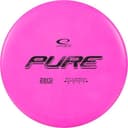
Latitude 64 Zero Medium Pure
A soft, straight putting putter for players who prefer a touch of glide and turn.
Pros
- Comfortable rim and a confidence-building straight flight
- Slight glide and turn make it a soft, accurate approach disc too
- Grippy Zero Medium plastic performs well in cold weather
- Affordable and easy to buy in a matched set
Cons
- Soft plastic dents more easily than firm blends
- Slight understability is not for players who want fade
- Less wind-resistant than an overstable putter
The Pure is Latitude 64's signature putter and the polished counterpoint to the Westside Harp. Where the Harp is an overstable workhorse you throw, the Pure is a true putting putter you putt with. Co-designed with pro Jesper Lundmark, it has a comfortable, medium-deep rim and a flight built for the basket: 3/3/-1/1, meaning straight with a hint of glide and a very gentle finish.
The slight understability is a deliberate feature. On the green, the Pure holds whatever line you give it without darting left, which builds confidence for new putters. On a stronger throw it will flip up and turn, so it doubles as a straight, glidey approach disc when you want a soft touch. It is one of the easiest putters to learn a consistent putting stroke with.
Zero Medium plastic is the key here. It is a soft, grippy base blend that feels secure in cold weather and holds the disc steady at release. Some players prefer a firmer putter and will reach for Zero Hard instead; the soft Medium is the right call if you like a putter that grips the chains and stays put. Between the Pure and the Judge, the trilogy lineup has the putting-style preference covered for almost everyone.
How to Build a Trilogy Bag
The advantage of building a bag entirely from trilogy disc golf brands is consistency. Same factory, comparable plastic tiers, no awkward overlaps. Here is a sensible progression.
Starter bag (3-5 discs). This is essentially the Trilogy Challenge kit philosophy: one disc per category. Start with a Latitude 64 Diamond as your driver, a Dynamic Discs EMAC Truth as your midrange, and a Dynamic Discs Judge as your putter. Three discs, all forgiving, all from this family - that is a complete first bag. Add the Latitude 64 River as a second driver once the Diamond starts flipping over on you.
Intermediate bag (7-10 discs). Keep all four above and start filling gaps. Add the Westside Harp as your overstable approach and utility disc - it covers wind and forehand shots the EMAC Truth cannot. Add the Latitude 64 Pure if you prefer a softer putting feel than the Judge, or stack a second Judge. From here, an overstable midrange and a faster distance driver round things out.
The plastic-tier rule. Use base plastic (Prime, Zero, Origio) for putters and approach discs you throw short and want to feel grippy. Use premium plastic (Lucid, Opto, VIP) for drivers and midranges you throw hard and want to keep their flight numbers. This rule holds across all three brands because the plastic tiers line up.
The point of buying within the trilogy family is not brand loyalty for its own sake. It is that the molds are designed to complement each other, the plastics behave predictably, and you can shop all three catalogs as one coherent lineup.
Frequently Asked Questions
Is Trilogy a disc golf brand?
No. Trilogy is the nickname for the partnership between three separate brands - Latitude 64, Dynamic Discs, and Westside Discs. You will never find a disc stamped only "Trilogy." You buy discs from one of the three brands, and they are all part of the trilogy family.
Are Latitude 64, Dynamic Discs, and Westside the same company?
They are owned and operated together and share the same Latitude 64 manufacturing facility in Kalmar, Sweden. They keep separate brand identities, mold catalogs, and stamp designs, but the discs are all pressed in the same plant by the same partnership.
What is the Trilogy Challenge?
The Trilogy Challenge is an annual series of beginner-friendly tournaments held at courses worldwide. Each entrant throws three discs - one new release from each brand - and the entry fee includes those discs plus extra gear like a bag. It is designed to be an easy first tournament and a showcase of all three lineups.
Which trilogy brand is best for beginners?
Dynamic Discs is the most beginner-focused of the three, with affordable Prime plastic, plain-English disc names, and starter sets. That said, Latitude 64's Easy to Use line - the Diamond especially - includes some of the best individual beginner discs in the trilogy family.
Are trilogy discs PDGA approved?
Yes. The molds discussed here, including the Pure, River, Judge, EMAC Truth, Harp, and Diamond, are PDGA approved and legal for sanctioned play. Always confirm a specific mold on the PDGA approved disc list if you are unsure.
What is the difference between Opto, Lucid, and VIP plastic?
They are the premium translucent plastics of Latitude 64, Dynamic Discs, and Westside respectively. All three are durable, grippy, and made in the same factory. Opto tends to feel slightly softer, VIP slightly stiffer, with Lucid in between - but all three keep their flight numbers well over time.
Do I need discs from all three brands?
Not at all. You can build a great bag from a single trilogy brand. The benefit of mixing is access to each brand's strengths - Latitude's controllable drivers, Dynamic's friendly putters, Westside's overstable utility molds - all with consistent plastic feel.
Final Thoughts
Trilogy disc golf is one of the most beginner-friendly corners of the sport once you understand the structure. Three brands, one factory, complementary lineups. You do not have to pick a side - you can shop Latitude 64, Dynamic Discs, and Westside as a single coherent catalog and trust the plastics to behave the same.
If you are starting out, the Latitude 64 Diamond and a Dynamic Discs Judge are the two discs to buy first - an easy-distance driver and a do-everything putter. Add the Dynamic Discs EMAC Truth for a straight midrange and you have a complete starter bag from one family.
As you improve, the Latitude 64 River becomes your workhorse driver, the Westside Harp covers wind and forehands, and the Latitude 64 Pure gives you a softer putting option. If you want an even more understable beginner driver to learn rollers and big anhyzers, the Westside Underworld is the trilogy family's flippiest fairway driver.
For more help choosing your first discs, see our best disc golf discs for beginners guide. And if you are still weighing manufacturers, our disc golf brands guide puts the trilogy family in context against the rest of the market.
Affiliate Disclosure
This post contains affiliate links. As an Amazon Associate, Pine Tree Disc earns from qualifying purchases at no additional cost to you. Learn more
Isaac "Steaks" Salisbury is the Maine native who founded Pine Tree Disc Golf. He's been throwing plastic through Maine's forests and fairways for years and started Pine Tree to build disc golf gear and content that players can wear and trust on and off the course.
Learn more about Pine Tree Disc →